
10 Chargeback Prevention Tools: Compare Options
A dispute team can lose control of a chargeback before anyone opens an evidence file. An issuer alert arrives, several transactions need attention, refund rules aren't clear, and nobody has one view of which cases can still be resolved before they become formal chargebacks. Meanwhile, a pre-transaction fraud decision, an issuer alert, and a post-dispute evidence workflow may all be sold as chargeback prevention, even though they act at different stages and solve different problems.
The stakes are material. The Federal Reserve Bank of Atlanta's analysis of ecommerce fraud costs found that merchants devoted an average of 11% of annual ecommerce revenue to fraud management in 2023. First-party misuse, often called friendly fraud, accounted for 34% of reported ecommerce fraud concerns, and merchants reported a 62% increase in first-party disputes since 2021. Those figures explain why prevention tools need to do more than assemble evidence after a chargeback lands.
This comparison organizes ten platforms by where they act: before authorization, when an issuer raises a dispute, or after a chargeback is filed. It explains what each does, what it can't do, what to verify about pricing and integrations, and which merchants may find it useful. For practical steps to address fraud earlier in the payment flow, see this guide to how to stop tour payment fraud.
1. Disputely
Disputely is built around the window between an issuer receiving a customer dispute and a formal chargeback being filed. It connects with Visa Rapid Dispute Resolution (RDR), Mastercard CDRN, and Ethoca alerts, then applies merchant-defined rules to decide whether to refund an eligible transaction. That puts it in the alert and early-resolution category, not the same category as a fraud model that approves or declines orders at checkout.
The platform supports payment services including Stripe, PayPal, Shopify Payments, Authorize.net, and Square. Disputely advertises a no-code setup that can take about five minutes, around-the-clock monitoring, and 99.9% uptime. Those are vendor-provided claims, not independent performance guarantees, so ask how uptime is measured and which integrations are available for your particular configuration.
Match refund rules to the case
Automatic refunds can stop a dispute from becoming a chargeback, but they also return the customer's money. Disputely says merchants can configure rules and use intelligent filtering to avoid refunding disputes they believe they can win. That distinction matters: eliminating a chargeback doesn't necessarily eliminate the underlying loss if a refund sacrifices revenue unnecessarily.
Operational test: Before enabling automatic refunds broadly, define which dispute reasons, transaction values, customer histories, and fulfillment records qualify. Confirm how the platform handles alerts that overlap across network programs.
Disputely also offers dispute analytics and says it can automate evidence handling and shipping-tracking workflows for cases that proceed. Its website advertises up to 99% chargeback reduction and reports protecting more than $1 billion in revenue and serving 5,000+ businesses. Treat those as company-reported figures, and ask how results are defined for a merchant with a similar payment mix and dispute profile.
Pricing is described as pay per alert, with no setup fee or contract; the exact rates aren't published in the supplied information. The best fit is an ecommerce, subscription, or direct-to-consumer merchant that needs early alerts and wants to reduce manual handling. Review the platform's chargeback-fighting capabilities, then ask for the alert fees, network coverage, and refund controls before estimating savings.
2. Verifi, a Visa Solution
Verifi is a network-level dispute prevention option. Its Rapid Dispute Resolution (RDR) service can automatically credit eligible disputes before they post as chargebacks. CDRN provides alerts that give merchants an opportunity to refund, while Order Insight shares transaction details with issuers to help address claims that a cardholder doesn't recognize a purchase. Learn about the services through Verifi's product information.
The important distinction is timing and eligibility. An RDR credit resolves an eligible case through a network workflow; an alert requires the merchant or its software to act within the available response window. Order Insight is aimed at clarifying a transaction, not guaranteeing that every cardholder will withdraw a dispute.
Confirm overlap before enabling automation
Verifi may suit merchants looking to resolve eligible disputes close to the issuer and network process. Coverage includes Visa and participating non-Visa issuers, but pricing and eligibility depend on dispute type and issuer. Confirm which transactions qualify under your agreement rather than assuming every alert can be handled identically.
Accurate descriptor mapping and transaction matching are essential. If a merchant also uses another alert provider, duplicate signals can create duplicate refunds unless systems share a clear record of each transaction and resolution. Ask how the integration identifies a transaction, records an issued credit, and suppresses a second action when an alert arrives through another route.
RDR can reduce manual work when the merchant's rules are well defined. It doesn't replace pre-authorization fraud screening, and it won't resolve every dispute reason. Compare the service against your issuer mix and the causes of your disputes, then get the eligible transaction rules and fees in writing.
3. Ethoca
Ethoca, a Mastercard company, provides issuer alerts that can arrive after a cardholder contacts their bank but before the dispute becomes a formal chargeback. The merchant can then decide whether to refund the transaction. Its Consumer Clarity service adds merchant and receipt information intended to help cardholders recognize purchases. Product details are available from Ethoca.
That makes Ethoca complementary to checkout fraud prevention. A legitimate order can pass fraud screening and still generate an unrecognized-transaction dispute, for example when the billing descriptor is unfamiliar. Consumer Clarity addresses that recognition problem, while an alert gives the merchant a chance to resolve an already-raised concern.
Alert access only helps if the team can act
Ethoca's alert network can generate volume for merchants whose transactions are covered by participating issuers. But the alert isn't the same as a successful prevention outcome: the merchant still needs to match it to an order, apply a refund decision, and complete the action within the available window.
Mastercard reports that Ethoca Alerts has prevented more than 110 million chargebacks since its 2011 launch, including more than 39 million in 2025 alone. It also reports over $1 billion in fraud prevented during 2025. These are network-reported figures, not a forecast for any individual merchant. Mastercard also describes unresolved disputes as requiring an average of 2.5 phone calls to a consumer's bank, with approximately 60% escalating into chargebacks. See Mastercard's Ethoca Alerts overview.
The practical trade-off is that alert fees may still apply when a merchant refunds. Confirm the fee structure, issuer coverage, and timing requirements. Ethoca is most useful when the team can respond quickly and wants to complement Visa-focused coverage, not when alerts will sit in an unattended queue.
4. Midigator
Midigator, an Equifax company, consolidates post-transaction alerts and dispute analytics. It can integrate Verifi and Ethoca alerts, automate refund decisions, and provide an API and portal for submitting resolutions. Merchants can review the company's platform at Midigator.
The central value is operational consolidation. A team handling feeds from different providers may prefer one queue, one set of decision rules, and one reporting view to managing each network relationship separately. The platform can also help surface recurring dispute drivers, which matters when the remedy is a billing, fulfillment, or support change rather than another refund rule.
Centralization has a price
An intermediary can simplify setup, but it may add fees compared with contracting directly with alert networks. Midigator's pricing is generally custom and may include per-alert or platform charges, so compare the full cost with the direct-provider alternative. Include the value of saved staff time, not just the cost of the alert feed.
Midigator is a better fit for teams that need centralized alert handling and reporting than for a merchant seeking only checkout fraud screening. It doesn't make an issuer alert useful by itself: transaction matching, refund authorization, and a clear escalation path still need to work.
During evaluation, ask whether the reporting separates alerts resolved before chargeback from disputes that later posted, and whether teams can segment outcomes by reason, processor, or payment type. If the analytics don't reveal the operational cause of disputes, centralizing the queue may make work easier without reducing the underlying problem.
5. Kount
Kount combines fraud screening with a Chargeback Management module for alert intake, deflection tracking, and reporting. Merchants can use its post-transaction workflows alongside Kount's pre-authorization fraud screening, bringing checkout decisions and later dispute activity into a connected platform. Review the product range at Kount.
That combination can be useful when a merchant wants to examine both sides of the lifecycle: which orders the fraud system approved, and what happened when an approved transaction later drew an alert or dispute. Its dashboard and analytics are intended to track alert handling and deflection status, while integrations and workflows sit within Kount 360.
Separate screening from dispute resolution
Kount's pre-authorization fraud screening acts before an order is approved. Alert management acts later, once a dispute signal is available. The two capabilities can support a joined-up program, but neither substitutes for the other: screening won't address a customer who disputes a legitimate purchase, while an alert workflow can't prevent every fraudulent order from being accepted.
Kount's scope may appeal to a merchant that already needs a fraud platform and can support its configuration. The supplied information describes pricing as unpublished and enterprise-oriented, which may be a hurdle for smaller teams. Ask what's included in the contract, which alert sources are covered, and whether deflections are reported separately from disputes that still reach chargeback.
Kount's materials state that deflections don't count toward Visa monitoring programs. Confirm the applicable program treatment and definitions in your own contract before relying on that point. For context on the operational implications of high dispute pressure, see this guide to high chargeback rates.
6. Signifyd
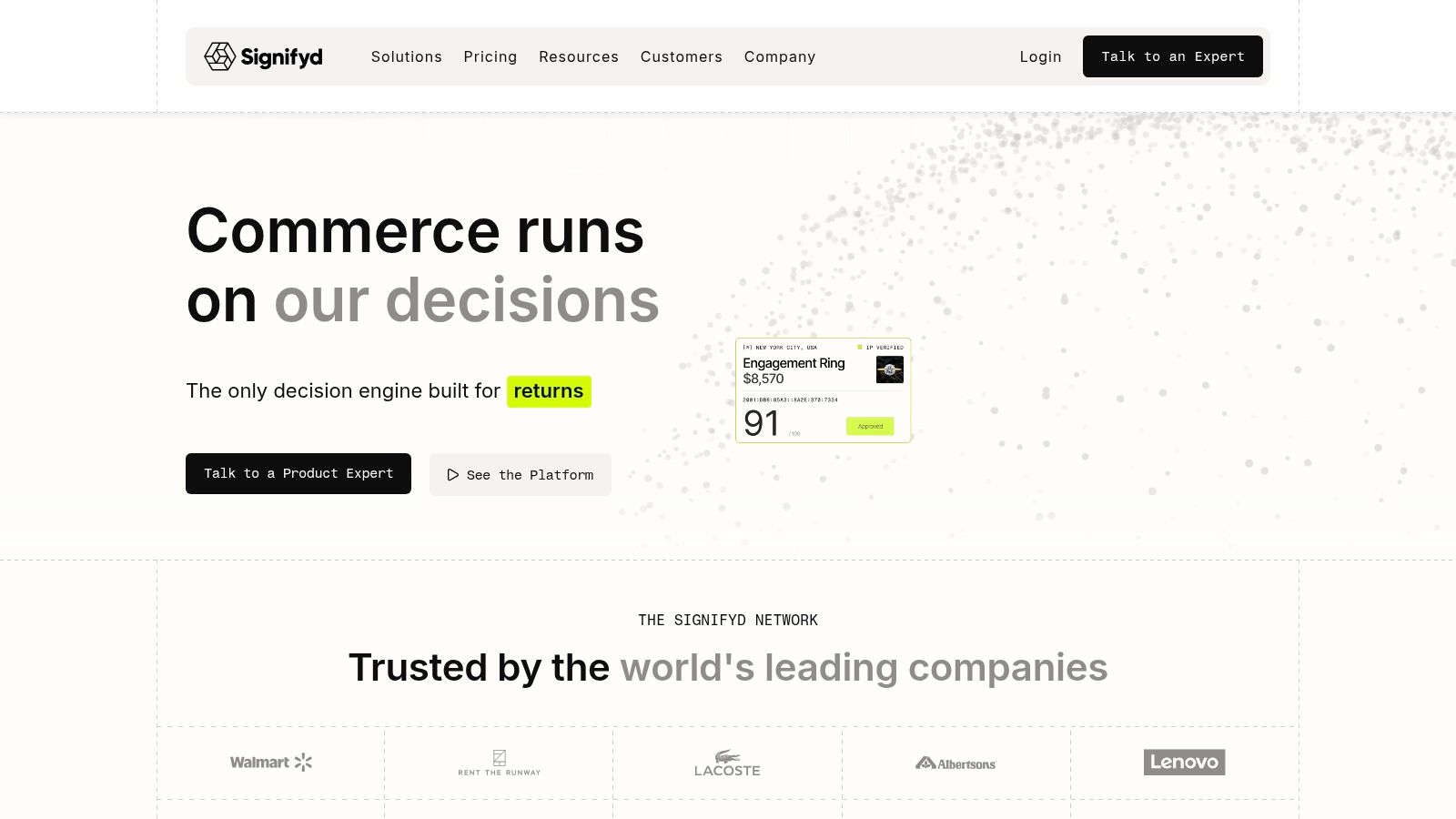
Signifyd focuses on order decisions and liability coverage, not just alerts after a customer contacts an issuer. It makes approve-or-decline decisions and offers a financial guarantee on approved transactions under its protection offering. Depending on the plan, Complete Chargeback Protection may also cover abuse and item-not-received claims. Explore the terms and product options at Signifyd.
The model can make covered fraud losses more predictable, while helping a merchant avoid turning away orders solely because its own rules flag risk. Signifyd also uses commerce network data for identity and intent intelligence and offers integrations within the Shopify and BigCommerce ecosystems.
Read the guarantee boundary
A guarantee is not universal protection against every chargeback. Coverage varies by plan, and non-fraud reasons may require additional protection. Ask for the covered dispute categories, exclusions, evidence requirements, and claim process in writing before comparing a guarantee with alert-based prevention.
Pricing is custom and typically based on a percentage of processed gross merchandise value (GMV). That means the contract's economics depend on both covered exposure and the share of orders subject to fees. Model it against your own margins and dispute profile rather than comparing it only with a per-alert tool.
Signifyd may suit a merchant whose central concern is fraud at checkout and who wants liability transferred for covered approved orders. It's less of a direct substitute for an issuer-alert platform: an alert may still be useful for disputes that fall outside the guarantee, such as certain customer-service or billing problems.
7. Riskified
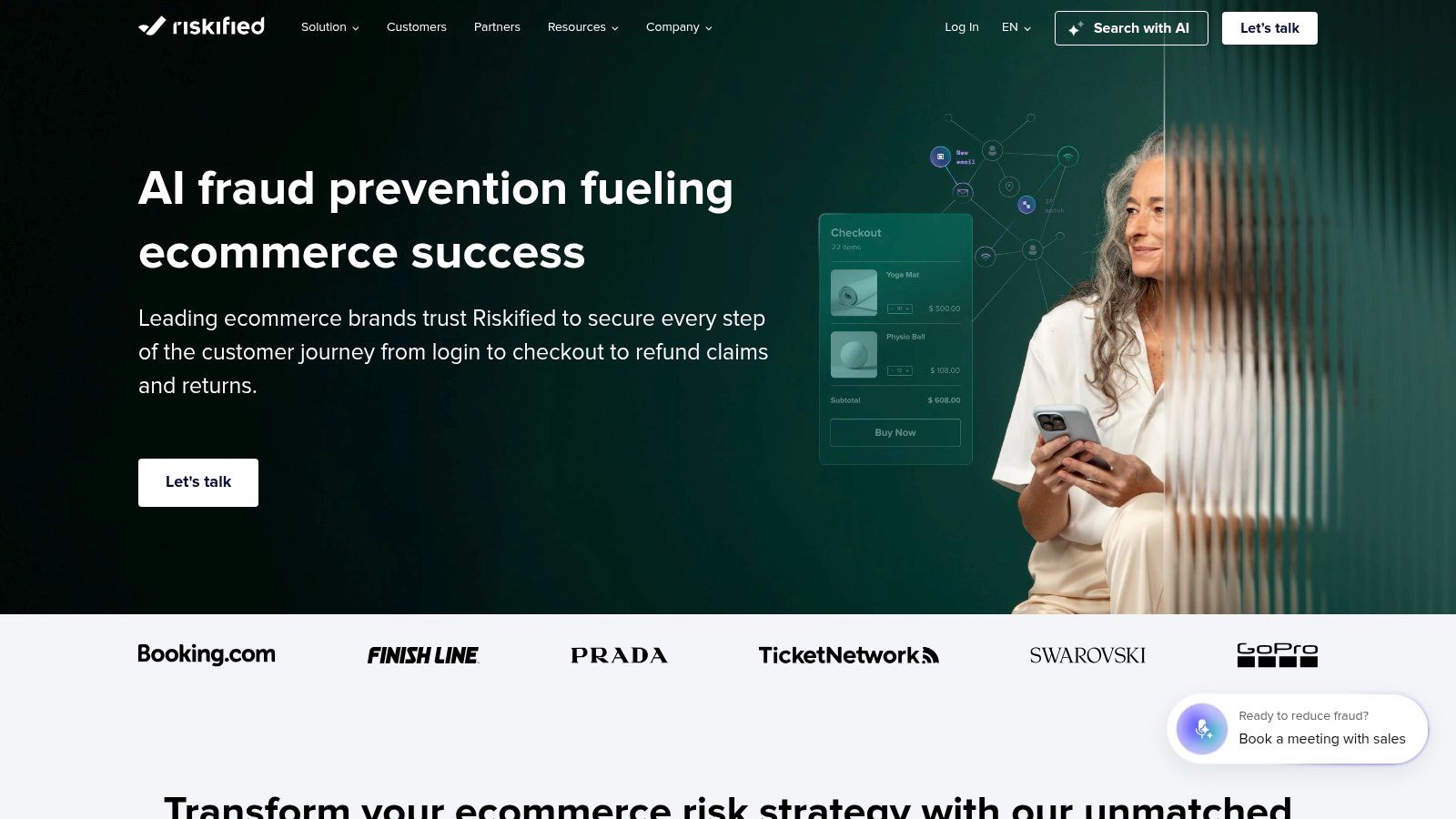
Riskified combines fraud decisions with dispute operations. Its Chargeback Guarantee shifts covered fraud liability away from the merchant, while Dispute Resolve centralizes evidence, submissions, and analytics. The company offers APIs and a platform for structured dispute workflows; details are available from Riskified.
The separation between these functions matters. A guarantee addresses financial exposure on transactions the system approves, subject to coverage terms. Dispute Resolve helps teams organize cases and evidence. Together, they may suit high-volume merchants who need both pre-authorization controls and a more structured process for disputes that still arise.
Evaluate the operating change, not just the feature set
Riskified is positioned for enterprise-scale merchants across verticals and regions. Risk-adjusted pricing is oriented toward enterprise buyers, and integration may require changes to existing approval and dispute workflows. Ask which teams must own implementation, how approved transactions are matched to later disputes, and what performance reporting distinguishes fraud decisions from dispute outcomes.
The guarantee and dispute platform should be assessed separately in the contract. Confirm exactly which fraud-related reasons are covered, how non-fraud disputes are handled, and whether evidence workflows integrate with the systems that hold fulfillment and customer-service records.
Riskified may fit a merchant that wants one provider across fraud liability and dispute operations. It shouldn't be treated as a replacement for every alert network or for upstream fixes to unclear billing and cancellation processes. Merchants using Shopify can also compare the specific workflow described in this guide to Shopify chargeback protection.
8. ClearSale
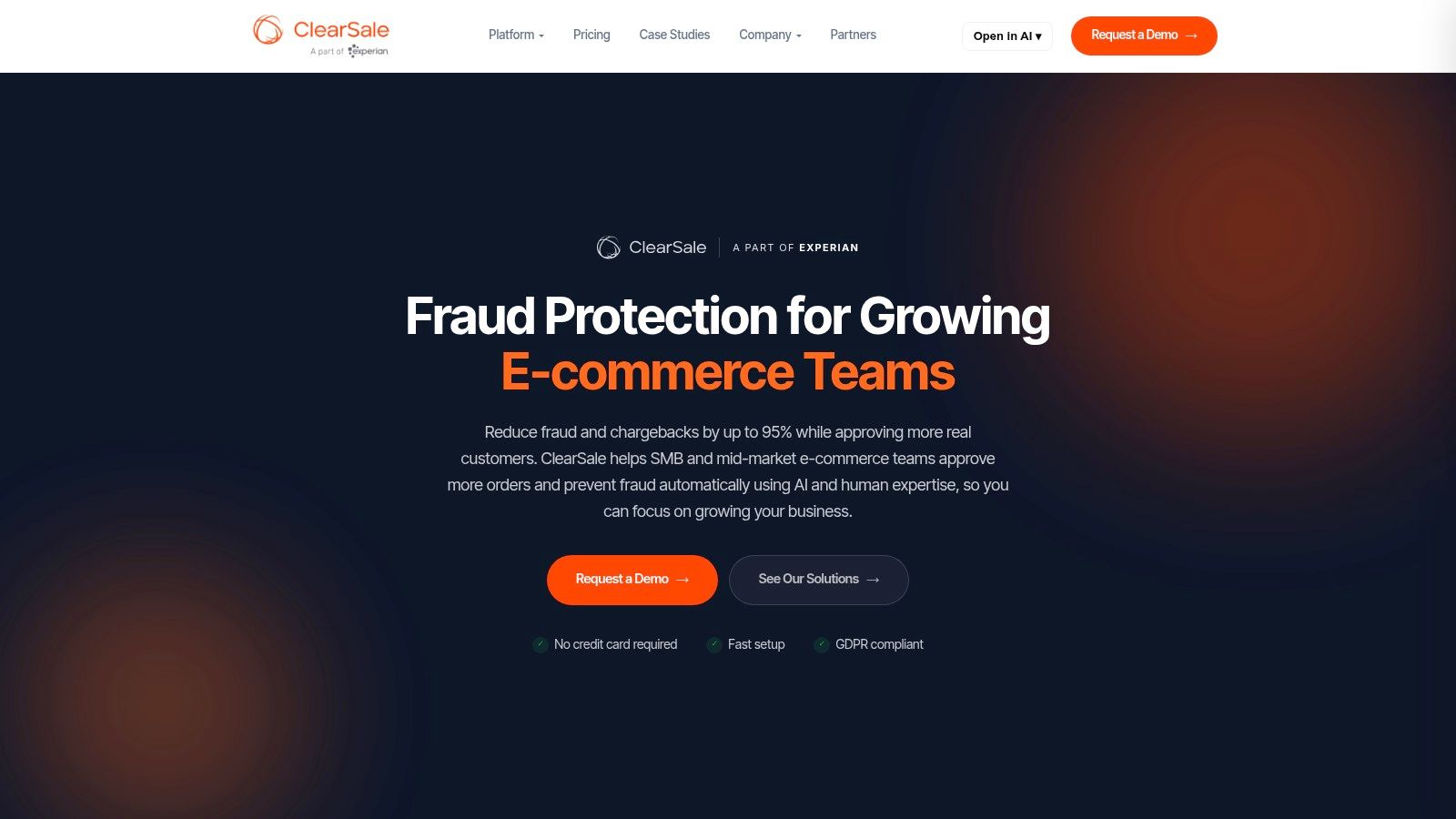
ClearSale offers fraud decisioning, chargeback management, and optional guarantee or protection models. Its guarantee plan reimburses covered fraud-related chargebacks, while the broader options let merchants choose between protection, guarantee, and management services. Product details are available at ClearSale.
The flexibility may appeal to direct-to-consumer brands and small or midsize businesses that want to choose a service model rather than buy a single fixed package. ClearSale also describes per-decision pricing options, which can make a quote easier to relate to the number of orders reviewed.
Match the coverage to the dispute reason
ClearSale's guarantee focuses on covered fraud-related chargebacks. A merchant with a high share of disputes caused by unclear billing, duplicate charges, failed cancellations, or delivery problems may need separate processes for those cases. Don't assume that fraud protection also covers operational errors or first-party misuse.
A per-decision model may be attractive, but cost depends on the quote and the merchant's risk profile. Ask whether fees apply to all reviewed decisions, how the guarantee changes the price, and which dispute categories qualify for reimbursement. Compare those costs with the total exposure the plan covers.
ClearSale can be a practical option for a merchant looking for flexible fraud protection and management choices. It's less suitable if the main need is to process issuer alerts and issue tightly controlled refunds before a chargeback is filed. Decide which stage is causing losses before choosing a service tier.
9. Forter
Forter makes real-time approve-or-decline decisions using identity and commerce data, with the aim of reducing fraud while avoiding unnecessary declines. Merchants can choose contract terms that include chargeback coverage or an uncovered pricing model. The platform also offers policy-abuse and payment-optimization options. See Forter's product information.
This makes Forter a pre-transaction fraud decisioning platform first. Its place in the lifecycle differs from Ethoca or Verifi, which provide signals after a customer has raised a dispute with an issuer. Merchants may use both types of tools, but they should measure their outcomes separately.
Compare covered and uncovered economics
Forter's contract options offer flexibility as a fraud program develops, but the commercial model and coverage boundaries need careful review. Pricing and sales are enterprise-oriented, and merchants should confirm which chargeback reasons are covered, how a claim is handled, and whether policy-abuse protection is included or an add-on.
A guarantee can transfer exposure for covered orders, while an uncovered model leaves the merchant responsible for the resulting losses. Neither structure resolves every cause of chargebacks. For example, a customer who can't recognize a billing descriptor or reach support may still dispute a legitimate order after it passed fraud checks.
Forter is best considered by merchants with enough fraud volume and internal capacity to assess real-time decisioning. Track both fraud losses and declined legitimate orders, and compare those outcomes with alert-based prevention and operational changes. A tool that reduces fraud but blocks valuable customers can create a different kind of revenue problem.
10. Vesta
Vesta combines fraud prevention with a Payment Guarantee for eligible approved orders. Its Zero-Fraud Guarantee covers qualifying fraud-related chargebacks, and the platform includes a merchant portal for chargeback review and guarantee claims. Implementation documentation and program variations are available, with some configurations bundled with acquiring or processing services. Review the offering at Vesta.
The key distinction is that Vesta's guarantee is aimed at covered fraud exposure. It doesn't automatically cover policy abuse or other non-fraud dispute reasons, so merchants should compare the policy against their actual reason-code mix. A payment guarantee is a form of financial risk transfer, not a universal prevention layer.
Check what the bundle includes
Vesta may suit merchants that want fraud controls and payment services combined, or that value a guarantee and a portal for reviewing claims. When acquiring or processing is bundled, compare the complete commercial arrangement rather than looking only at the fraud product. Ask how the guarantee interacts with the existing processor agreement and what happens to disputes outside its scope.
Pricing isn't broadly visible and requires a sales discussion. Request clear terms for eligible transactions, excluded dispute reasons, claim documentation, and any conditions attached to the guarantee. Also confirm which teams will handle alerts and operational disputes that aren't covered.
Vesta is a stronger fit when fraud-related chargeback exposure is the main concern and the merchant wants a guarantee structure. If most preventable losses stem from customer communication or refund friction, the merchant may need alert resolution and operational fixes alongside fraud decisioning.
Top 10 Chargeback Prevention Tools: Feature Comparison
| Platform | Core Approach | Standout Features | Best Fit | Pricing / Value |
|---|---|---|---|---|
| 🏆 Disputely | ★ Pre-chargeback alerts via Visa RDR, Mastercard CDRN, and Ethoca; automated refund rules | ✨ Processor integrations, analytics, and evidence tools; advertises up to 99% chargeback reduction | 👥 Subscription, ecommerce, and high-volume merchants | 💰 Pay per alert; no setup fees or contracts; rates not listed |
| Verifi (Visa) | Network-level dispute resolution and alerts | ✨ RDR auto-credits eligible disputes; Order Insight shares transaction details | 👥 Merchants seeking direct network tools | 💰 Pricing and eligibility vary by contract |
| Ethoca | Mastercard issuer alerts before chargebacks post | ✨ Consumer Clarity adds merchant and receipt details | 👥 Merchants wanting broader issuer-alert coverage | 💰 Alert fees may apply |
| Midigator | Centralizes Verifi and Ethoca alerts and dispute operations | ★ Portal, API, automated decisions, and analytics | 👥 Teams seeking centralized alert management | 💰 Custom pricing; per-alert or platform fees may apply |
| Kount | Fraud screening plus chargeback management | ✨ Combines pre-authorization fraud tools with alert and deflection reporting | 👥 Merchants wanting an integrated fraud stack | 💰 Enterprise-oriented; pricing not listed |
| Signifyd | Order decisions with a financial guarantee on approved transactions | ✨ Optional coverage for abuse and item-not-received claims | 👥 Merchants prioritizing fraud protection and conversion | 💰 Custom pricing, typically a share of processed GMV |
| Riskified | Fraud guarantee plus dispute-management workflows | ★ Centralized evidence, submissions, and analytics | 👥 High-volume and enterprise merchants | 💰 Risk-adjusted, typically enterprise-oriented |
| ClearSale | Fraud decisioning with optional chargeback guarantees | ✨ Protection, guarantee, and management options | 👥 DTC and small-to-mid-sized businesses | 💰 Per-decision options; terms vary |
| Forter | Real-time fraud decisions, with optional chargeback coverage | ✨ Flexible covered or uncovered contract models | 👥 Enterprise merchants with evolving fraud programs | 💰 Enterprise pricing; confirm covered dispute types |
| Vesta | Fraud prevention with a payment guarantee for eligible orders | ✨ Merchant portal and possible acquiring or processing bundles | 👥 Merchants seeking covered fraud-risk transfer | 💰 Pricing not broadly listed |
Choose a Prevention Stack, Not a Shortlist
A chargeback stack should match the point where losses begin. Merchants facing unrecognized-transaction claims can prioritize issuer alerts, accurate billing descriptors, and fast refund rules. Retailers with fraud losses should assess pre-authorization decisions and guarantees for eligible transactions. Complex payment operations may benefit from centralized alert handling, integrations, evidence workflows, and analytics that reveal recurring dispute causes.
These tools act at different stages. Network alerts give a merchant the chance to refund a customer before a dispute becomes a chargeback. Fraud liability protection transfers responsibility for eligible transactions under specified contract terms. Dispute operations tools manage alerts, evidence, submissions, and reporting, but generally do not prevent the original transaction or cover the loss. Some businesses need tools across multiple stages. Overlapping alert feeds, however, can raise costs without extending useful coverage.
Fraud costs include more than the transaction value. In LexisNexis Risk Solutions' 2024 True Cost of Fraud study, based on a Forrester Consulting survey of retail and ecommerce risk executives in the U.S. and Canada, the average total cost was $3 for every $1 lost to fraud. Investigation, processing, replacement goods, shipping, and administration can add to the loss. Compare a platform's cost with these fully loaded expenses, while including refunds and alert fees that do not prevent a dispute.
Before purchasing, map dispute reasons to each product's coverage. Check processor and issuer integrations, transaction-matching requirements, alert response times, guarantee exclusions, and limits on automated refunds. For custom pricing, clarify whether fees are per alert, per decision, tied to GMV, or charged as a platform fee. Compare total costs with the losses the tool is likely to avoid.
Test the workflow with the staff responsible for it. ACI Worldwide's 2025 payments-trends report reports that 63% of merchants planned to increase fraud-technology investment, while only about half planned to increase fraud-prevention staffing. The report also describes fewer manual order reviews and roughly 20% of manually reviewed orders being declined. These findings make implementation and measurement important: track alert-to-action time, false refunds, manual intervention, and whether the tool addresses operational causes, not only disputes already reported by issuers.
Start with your dispute-reason baseline, then assess vendors that act at the stage where losses occur. Pilot the rules, review the results, and extend automation only where performance supports it.
Disputely connects Visa RDR, Mastercard CDRN, and Ethoca alerts to rules-based workflows that can resolve eligible disputes before they become chargebacks. Teams seeking earlier visibility, controlled automated refunds, and dispute analytics can visit Disputely's chargeback alert platform to review its refund rules and assess whether its pay-per-alert model fits their operation.


