
10 Dispute Early Warning Services Compared
A customer has contacted their bank about a transaction, but the formal chargeback hasn't been filed yet. Your team receives an alert and has to make a costly decision quickly: issue a refund, investigate the order, stop fulfillment, or allow the dispute to proceed to representment. The decision affects more than one transaction. It can influence cash flow, operational workload, customer retention, and the health of your payment relationships.
Dispute early warning services notify merchants during this pre-chargeback stage. Visa and Mastercard use different ecosystems. Visa's tools include Rapid Dispute Resolution, Cardholder Dispute Resolution Network, and Order Insight, while Mastercard's ecosystem includes Ethoca Alerts and Consumer Clarity. Aggregators and managed-service providers connect to one or both networks and add workflow, analytics, automation, or representment support.
The useful comparison is not just which vendor has the longest feature list. It's which network can notify you, how quickly the notice reaches your team, what integrations can trigger a response, how refund decisions are controlled, how pricing is calculated, and whether the operating model fits your merchant profile. Alert timing and eligibility vary by network, issuer, transaction, processor, and provider configuration. The early-warning concept is closely related to the broader goal of identifying customer risk before it becomes churn, as SigOS explains in its overview of early warning systems.
1. Disputely
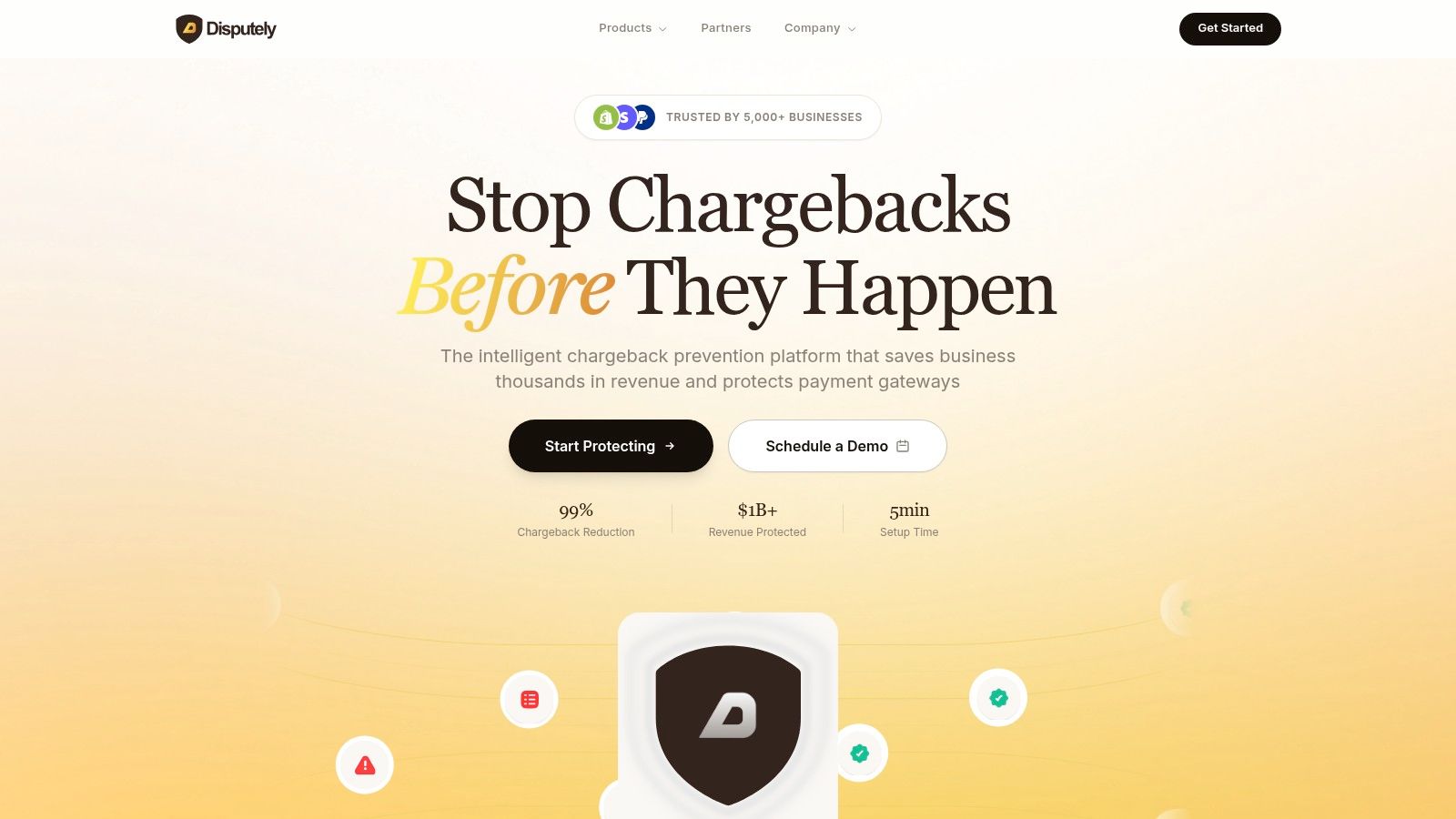
Disputely is built around the decision merchants face when an alert arrives: refund now, review the case, or let it move into formal dispute handling. The platform connects with Visa RDR, Mastercard CDRN, Ethoca, and Verifi, then routes alerts into automated workflows across processors and commerce platforms. Its supported integrations include Stripe, PayPal, Shopify Payments, Authorize.net, and Square, according to Disputely's platform information.
That combination matters because a merchant using only one network may miss eligible alerts from the other card brand. Visa's own material describes RDR as a pre-dispute workflow that can resolve qualifying cases through merchant-defined rules, while broader alert programs may require a merchant or system to respond during a short action window. Disputely's value is therefore less about adding another dashboard and more about connecting network alerts to the transaction system where a refund or fulfillment decision can happen.
Where Disputely fits best
Disputely is a strong candidate for ecommerce, subscription, SaaS, and direct-to-consumer teams that want automation without building separate network integrations. Its workflow supports intelligent filtering, automated refund execution, and evidence handling if a case still escalates. That gives merchants a path from pre-dispute prevention to post-dispute mitigation rather than forcing them to buy separate tools for each stage.
The main trade-off is control. Pay-per-alert pricing can be attractive when merchants want transparent usage-based costs, but alert fees can become material at high volume. Automatic refunds also protect dispute metrics at the cost of immediate revenue, so refund rules should account for order value, fraud likelihood, customer history, and whether the merchant could plausibly win through evidence.
Practical rule: Don't configure every alert to receive an automatic refund until you know which reason codes, products, and customer segments produce avoidable refunds.
Merchants should confirm the exact network enrollment, processor mapping, eligible alert types, refund timing, and escalation workflow before launch. The product is especially relevant when the business wants a single operational layer across Visa and Mastercard rather than separate network portals.
2. Ethoca by Mastercard
Ethoca is Mastercard's network-native alert service. It sends issuer-originated notifications when a cardholder questions a transaction, giving merchants an opportunity to act before the issue becomes a formal chargeback. Because it operates inside the Mastercard ecosystem, the service connects participating issuers with enrolled merchants through Ethoca's official platform.
Its main operational advantage is early notice at the network level. An alert can trigger a refund, pause fulfillment, or prompt an investigation into fraud, recurring-billing confusion, or an unfamiliar merchant descriptor. This timing matters only if the merchant can connect the alert to order, payment, and refund systems quickly. Without that workflow, network visibility may not produce a measurable reduction in disputes.
Ethoca's Consumer Clarity offering addresses recognition problems rather than alert handling alone. It shares order and receipt details that can appear in bank statements or issuer experiences, helping cardholders identify legitimate purchases before filing a dispute. Merchants should verify which data fields, processors, and issuer experiences are supported, since those details determine how much value the feature adds.
The Mastercard coverage decision
Ethoca fits merchants with meaningful Mastercard volume, internal payment operations, and a need for direct issuer-side visibility. It does not provide complete card-brand coverage. Visa transactions require Visa programs such as RDR or CDRN, either through separate enrollment or an aggregator that connects both networks.
Pricing requires equal scrutiny. Alert services commonly charge per alert, and Chargeback.io's explanation of chargeback alerts describes a practical response window of 24 to 72 hours, depending on the alert and workflow. Merchants should model alert fees against transaction value, refund rates, and staff capacity before selecting the service.
Ethoca is a practical choice for teams that can act quickly without a separate managed service. Smaller merchants should confirm whether they have enough volume and operational coverage to justify another network integration. Larger merchants should ask about issuer coverage, processor support, duplicate alerts, refund confirmation, escalation handling, and whether outcomes return to the network. These checks determine whether Mastercard coverage improves loss control or merely adds another queue.
3. Verifi
Verifi provides Visa's dispute-prevention suite, including Rapid Dispute Resolution, Cardholder Dispute Resolution Network, and Order Insight. The tools address different stages of the same problem. RDR can resolve qualifying disputes automatically according to merchant rules, CDRN gives merchants a pre-chargeback alert that may require action, and Order Insight shares transaction details to help issuers and cardholders identify legitimate purchases. The product information is available through Verifi's Visa dispute-prevention suite.
Visa reported that RDR launched in April 2021 and was intended to activate for all issuers and issuer processors in that release cycle. Visa and Verifi later reported availability in over 40 countries and 96% global Visa issuer coverage, with additional rollout milestones for Europe, Canada, and Latin America and the Caribbean in the cited release material. Visa also said its dispute tools addressed $695 million in potential disputes before escalation, and that RDR reduced the resolution timeframe from 24 days to a shorter pre-dispute workflow. Those figures come from Visa's RDR service documentation.
Automation versus revenue recovery
Verifi's central advantage is that RDR can remove manual handling from qualifying cases. The corresponding risk is that an automated refund can surrender revenue on a transaction the merchant might have defended successfully. Merchants need rules that distinguish high-confidence fraud or dissatisfaction from cases where fulfillment records, usage data, delivery evidence, or customer communications could support representment.
Visa coverage also doesn't solve Mastercard disputes. A merchant seeking broad card-brand protection will generally pair Verifi with Ethoca or use a provider that combines the two. Teams should confirm which transactions qualify for RDR, how issuer-side refunds interact with internal systems, and how CDRN alerts are delivered.
Disputely's automated dispute resolution workflow is one example of the type of control layer merchants can place above network programs. The important comparison is not merely direct versus third-party access. It's whether the merchant can apply consistent decision rules across network-native and manual-review alerts.
4. Midigator
Midigator, now associated with Kount and Equifax's broader chargeback offering, is an aggregator and dispute workflow platform rather than a single card-network rail. It brings Ethoca and Verifi alerts into one operational process, then adds APIs, webhooks, analytics, outcome reporting, and reason-code intelligence. Merchants can review alerts centrally and connect responses to refund, fulfillment, or customer-service systems through Midigator's dispute-management platform.
That architecture is valuable for businesses that don't want separate operational queues for Visa and Mastercard. An engineering team can use webhooks to trigger a refund or pause fulfillment, while operations teams can examine outcomes and recurring reason-code patterns. The platform therefore sits between raw network access and a fully managed service.
A useful fit for technical operations teams
Midigator is best suited to merchants with internal payment, engineering, or dispute operations. Its API and reporting model can support more customized workflows than a simple alert inbox. A merchant might automatically refund low-value, high-confidence fraud alerts, send ambiguous cases to review, and suppress duplicate notifications before they reach a human queue.
The commercial model is less straightforward than a simple pay-per-alert product. Merchants should expect to clarify network fees, platform fees, implementation costs, contract terms, and the treatment of alerts that are duplicated, invalid, or not eligible for resolution. Public pricing isn't provided in the supplied product material, so the quote should be evaluated against the merchant's actual alert volume and avoided dispute cost.
The aggregator model also introduces a dependency. If the provider's mapping, webhook delivery, or refund confirmation fails, the merchant can lose time inside the alert window. Before signing, ask for an end-to-end test covering alert receipt, transaction matching, refund submission, refund confirmation, network outcome reporting, and escalation to formal dispute handling.
5. Kount Chargeback Management
Kount Chargeback Management is designed for merchants that want dispute prevention alongside Kount's fraud tools. The solution centralizes Verifi CDRN and Ethoca alerts, supports APIs and reporting, and provides visibility into alerts, disputes, RDR events, and outcomes through Kount's chargeback management offering.
The strongest reason to choose it is consolidation. A merchant already using Kount for fraud decisioning can connect pre-transaction risk signals with post-transaction dispute information in a single vendor relationship. That can help teams compare the transaction's original risk context with the later dispute reason, rather than treating fraud prevention and chargeback operations as unrelated systems.
Consolidation has a cost
Kount is more appropriate for enterprise or growing payment teams than for a small merchant seeking a narrow alert feed. Its implementation may require coordination among fraud, payments, engineering, and customer-service stakeholders. The merchant should also clarify how the Kount product relates to Midigator, since the overlapping branding and suite structure can make product boundaries difficult to assess from a buyer's perspective.
Pricing is quote-based and may include platform charges in addition to network or alert costs. That structure can make sense when the merchant values shared reporting and a single support path, but it may be inefficient when the only requirement is low-touch refund automation.
Ask whether the platform supports the processors and MIDs in your environment, whether RDR events appear alongside CDRN and Ethoca alerts, and whether the reporting distinguishes alerts received, alerts acted on, refunds issued, and disputes prevented. Those are different outcomes and shouldn't be treated as interchangeable.
6. Chargebacks911
Chargebacks911 combines pre-dispute alert coverage with post-dispute services. Its offering includes Ethoca Alerts, Verifi CDRN and RDR, Order Insight and Consumer Clarity support, analytics, dashboards, managed workflows, and representment assistance through Chargebacks911's dispute services.
This breadth makes it a different purchase from a standalone alert product. A merchant can use the provider to manage early-warning responses, identify recurring dispute causes, and handle cases that still escalate. That can be useful for subscription businesses, high-risk merchants, and organizations with multiple processors or limited in-house dispute expertise.
Managed support for complex operations
The provider's advantage is operational coverage. Teams that lack the staff to monitor alerts, tune rules, prepare evidence, and analyze reason codes may prefer a service that handles more of the workflow. It can also help merchants connect immediate prevention with longer-term root-cause work, such as billing clarity, fulfillment communication, or product-policy changes.
The trade-off is commitment. Pricing and contract terms aren't publicly listed in the supplied material, so buyers should expect a customized commercial discussion. Merchants that only need an alert feed may pay for capabilities they won't use, while merchants with severe dispute pressure may find the broader service justified.
Before engaging, define the boundary between the provider's work and your team's work. Confirm who approves refunds, who handles customer contact, who owns evidence, how urgent alerts are escalated, and how outcomes are reported. For merchants that need only post-dispute evidence, a dedicated chargeback fighting workflow may be a narrower alternative. The right choice depends on whether the business needs prevention, representment, or both.
7. Chargeback Gurus
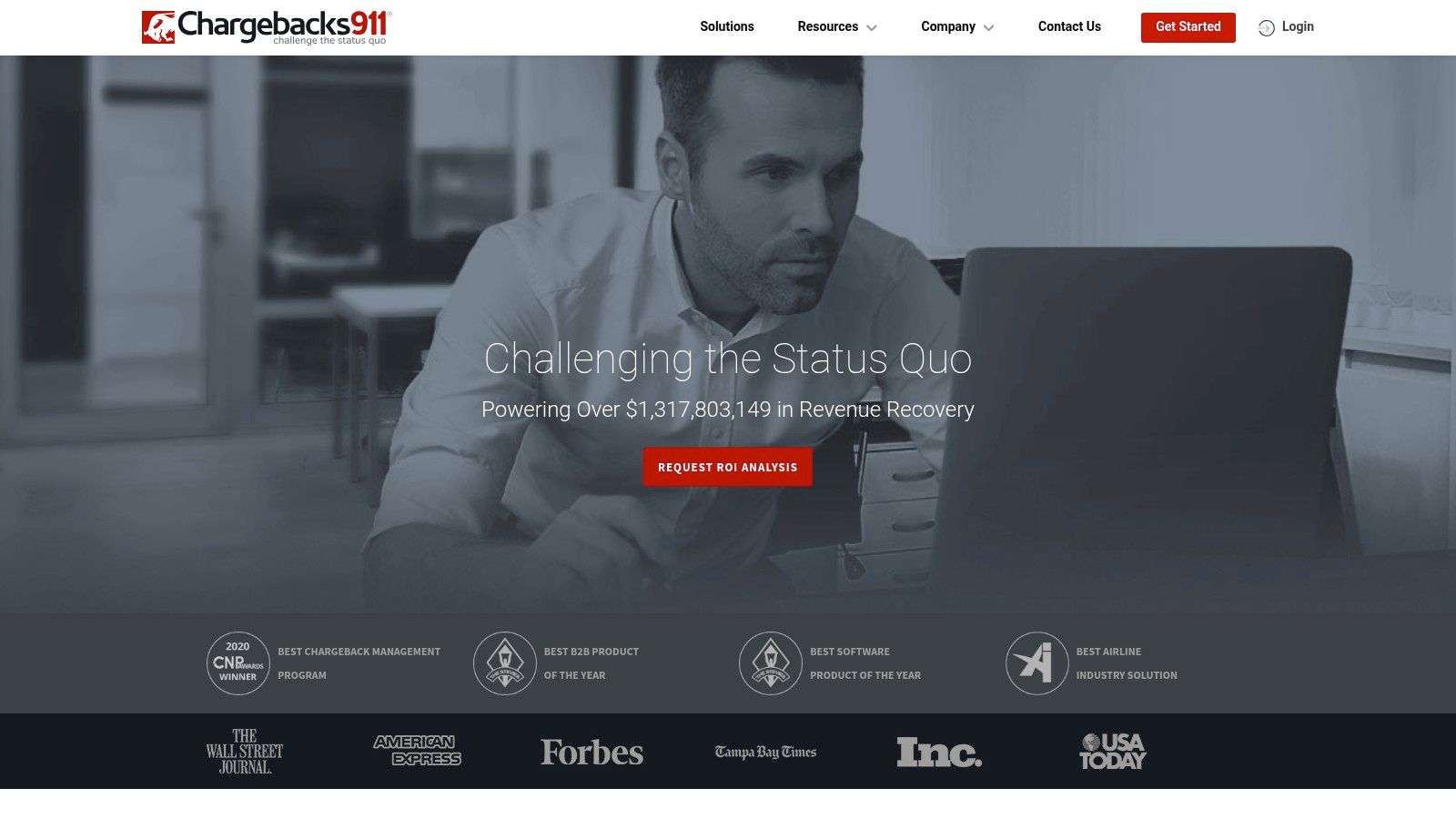
Chargeback Gurus offers a blended model. Merchants can use a portal for Verifi CDRN and Ethoca alerts, receive guided refund recommendations, review MID-level risk reporting, and add managed representment or consulting through Chargeback Gurus.
Its distinction is flexibility rather than a single technical feature. A merchant can choose self-service software, managed operations, or a hybrid arrangement. That makes the platform relevant to businesses whose needs change as their dispute volume, processor relationships, or internal staffing changes.
The model is especially applicable to businesses with recurring billing, travel, and direct-to-consumer operations, where an alert may represent more than straightforward payment fraud. A subscription dispute could involve cancellation timing. A travel dispute could involve service delivery or policy communication. A DTC case could require coordination between refund rules, fulfillment records, and customer support.
When flexibility is worth paying for
A hybrid model can reduce the risk of choosing between an overly basic alert feed and a fully outsourced service. The merchant might retain control over low-value refunds and send complex reason codes to a managed team. It could also use the provider's analytics to identify repeated triggers while keeping customer communication internal.
The downside is commercial complexity. Pricing is quoted, contracts are common, and smaller merchants may find the feature set larger than their immediate need. Buyers should ask whether self-service and managed tiers use the same alert coverage, whether the provider charges separately for network enrollment, and how representment fees interact with prevention fees.
The platform is a better fit when the merchant wants operational judgment, not just notification delivery. It's less compelling if the business has a small alert volume, simple refund rules, and an existing team that can manage network responses through APIs.
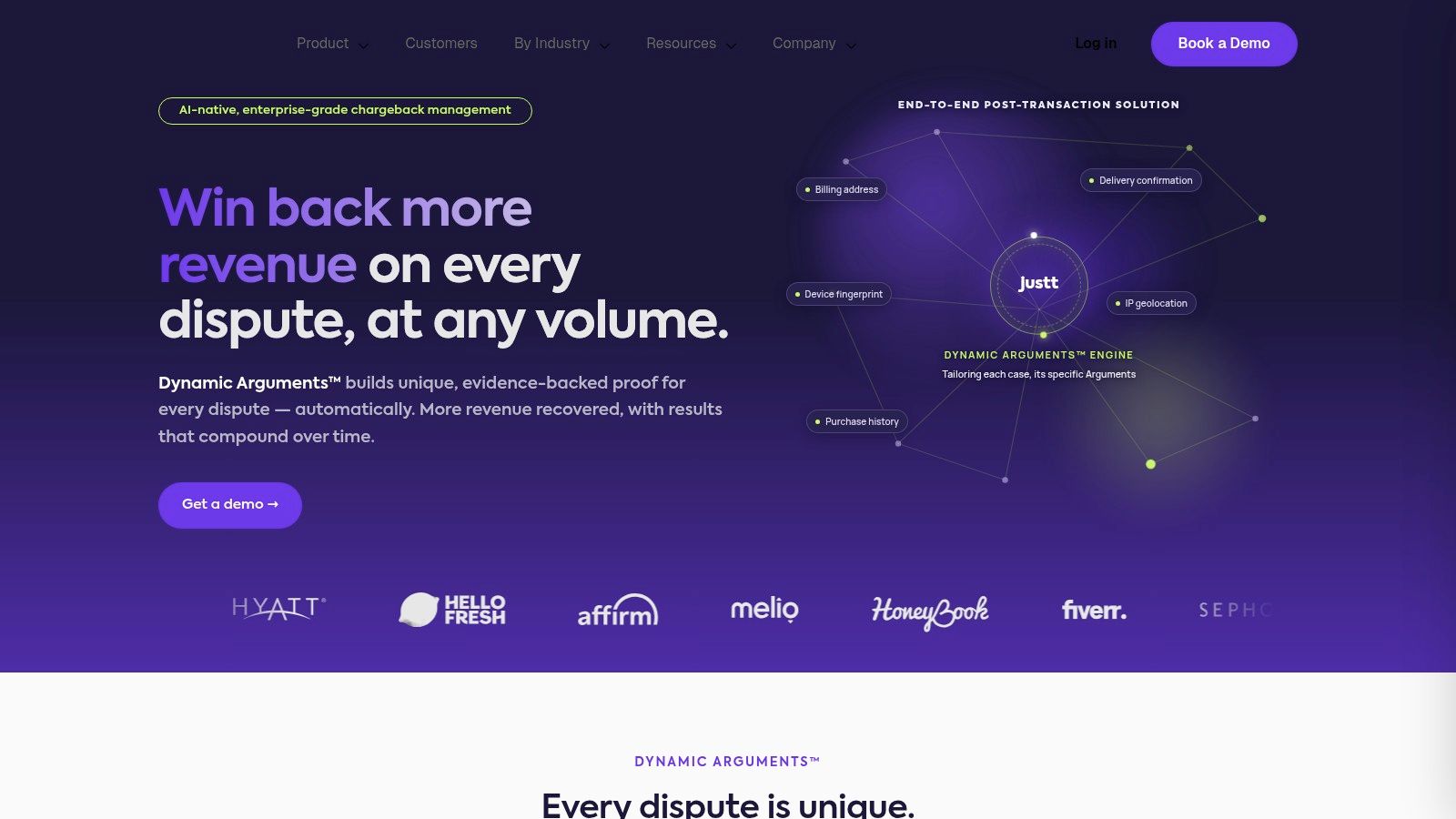
8. Justt
Justt targets merchants and developers that want policy-driven dispute automation. It connects Verifi's CDRN and RDR programs with Ethoca alerts, exposes APIs and webhooks, and supports playbooks for refund or fulfillment decisions across Shopify, Stripe, and custom commerce stacks through Justt's chargeback automation platform.
The platform's developer orientation changes the implementation question. Instead of asking only whether a dashboard can receive an alert, the merchant can ask whether an alert can trigger a specific internal action. For example, a business might route alerts by amount, product, customer status, vendor, or reason code. An alert could pause shipment, create a support task, or initiate a refund after the merchant's policy engine approves it.
Rule design is the real product decision
RDR requires particular care because qualifying cases are resolved through automated refund logic. If thresholds are too broad, the merchant may refund transactions that could have been defended. If thresholds are too narrow, the business may miss the opportunity to resolve disputes before they become formal cases.
Justt is therefore most suitable for teams with engineering capacity and a clear decision framework. It can be excessive for a small store that wants a simple managed response, especially if the business has limited transaction metadata or no one responsible for maintaining playbooks.
A buyer should test the full event lifecycle before production use. Confirm how the system matches an alert to an order, what happens when a transaction is missing, how duplicate events are handled, whether refunds can be held for review, and how the merchant receives final outcomes. API flexibility is useful only when the merchant can maintain the rules behind it.
9. Chargeflow Alerts
Chargeflow Alerts targets merchants that want pre-chargeback prevention without building direct network connections. It supports Shopify, Stripe, and custom stacks, combining Ethoca and Verifi alert handling with automated responses through Chargeflow Alerts. Its commercial model is presented around outcome-based or usage-based pricing, so buyers should examine both the workflow and the billing trigger.
The main operational question is speed from alert to verified order. For a Shopify brand processing 2,000 orders per month, test how Chargeflow matches an Ethoca alert to a Shopify order ID within the 24-hour window before enabling automatic refunds. Repeat the test with a missing order, a duplicate alert, and a failed refund. These cases show whether automation reduces staff work or creates exceptions for support teams.
Pricing requires the same level of testing. Define whether a billable event is an alert received, a refund issued, or a dispute demonstrably prevented. Ask how the contract treats alerts that are ineligible, duplicated, misidentified, or unlikely to become chargebacks. A transparent answer makes usage-based pricing easier to compare with a platform subscription or a managed service.
Chargeflow can suit Shopify and Stripe brands seeking quick setup and limited integration work. Custom-stack and enterprise merchants should confirm API depth, reporting options, processor support, and how multiple MIDs are handled. Network-native providers may offer direct coverage, while an aggregator such as Chargeflow can reduce implementation effort. The trade-off is that the merchant must verify which alerts reach its transactions.
For Shopify merchants comparing workflows, Disputely's Shopify chargeback protection provides another option to assess against alert timing, refund controls, processor connections, and total cost per prevented dispute.
10. ChargebackHelp
ChargebackHelp is a service-oriented provider for merchants that need a central point of contact across multiple dispute programs. Its offering includes Verifi CDRN and RDR, Order Insight, Ethoca Alerts, Consumer Clarity, Mastercom collaboration, integrations with commerce and CRM systems, and post-dispute representment through ChargebackHelp's dispute services.
The broad program coverage is most relevant to multi-MID, multi-processor, subscription, and high-risk businesses. These merchants often have more than one payment relationship and may struggle to maintain separate enrollment, alert, refund, and evidence workflows. A service provider can reduce that coordination burden if it clearly owns the operational handoffs.
A service-heavy option for complex environments
ChargebackHelp can support merchants that need enrollment assistance, alert management, refund workflows, consulting, and representment in one engagement. The advantage is continuity. The same provider can help prevent an eligible dispute, investigate the reason it occurred, and handle the case if prevention fails.
Small or low-risk merchants may not need that level of support. Pricing isn't publicly listed in the supplied material, so buyers should clarify whether the quote includes setup, network enrollment, platform access, per-alert charges, managed-service fees, representment, and consulting.
The key diligence question is ownership. Ask who receives the alert first, how quickly the merchant is notified, whether refunds require approval, how CRM and order data are matched, and what happens when the provider cannot resolve the alert inside the available window. For a complex payment estate, a single point of contact can be valuable. For a simple store, it may add unnecessary cost and process.
Top 10 Dispute Early-Warning Services Comparison
| Solution | Core features ✨ | Quality & effectiveness ★ | Pricing & value 💰 | Target audience 👥 | Unique selling points |
|---|---|---|---|---|---|
| Disputely 🏆 | ✨ Visa RDR, Mastercard CDRN, Ethoca feeds; fast processor integrations; AI filtering; auto-refunds; evidence submission | ★ ~99.9% uptime, ~99.7% detection, up to ~99% chargeback reduction | 💰 Pay-per-alert, no setup/contracts; ROI calculator | 👥 Subscription businesses, high-volume ecommerce, DTC | 🏆 Fast <5 min onboarding; 24–72h prevention window; intelligent filtering; automated refunds |
| Ethoca | ✨ Issuer→merchant alerts; Consumer Clarity for statement enrichment | ★ Strong Mastercard network coverage | 💰 Pay-per-alert (can add up at high volume) | 👥 Merchants needing Mastercard-native coverage | ✨ Network-native alerts + statement/issuer enrichment |
| Verifi (Visa) | ✨ RDR automated refunds, CDRN pre-dispute alerts, Order Insight | ★ Strong Visa coverage; RDR reduces dispute counts | 💰 Network-integrated; RDR auto-refunds can forfeit revenue if not tuned | 👥 Merchants prioritizing Visa dispute prevention | ✨ RDR automation + Order Insight for unrecognized claims |
| Midigator (Kount/Equifax) | ✨ Aggregates Ethoca & Verifi; APIs/webhooks; analytics & reason-code intelligence | ★ Mature tooling for operations & engineering teams | 💰 Custom/quote + platform/vendor fees (networks still bill) | 👥 Ops/engineering teams, mid-to-enterprise merchants | ✨ Unified alert intake and outcome reporting |
| Kount Chargeback Management | ✨ Central console for CDRN & Ethoca; APIs; reporting | ★ Single-vendor visibility when paired with Kount fraud stack | 💰 Enterprise, quote-based pricing with platform fees | 👥 Merchants using Kount for fraud prevention; enterprises | ✨ Consolidates fraud + dispute workflows in one platform |
| Chargebacks911 | ✨ Aggregated alerts (Ethoca/CDRN/RDR), dashboard, managed representment | ★ Hands-on support for complex/high-risk cases | 💰 Quoted pricing; managed services fees | 👥 High-risk, complex operations, enterprise merchants | ✨ Pre-dispute + post-dispute managed services + analytics |
| Chargeback Gurus | ✨ Single portal for alerts, alert intelligence, managed representment | ★ Flexible (SaaS, managed, hybrid) with strong dispute ops | 💰 Quoted pricing; contracts common | 👥 Travel, subscription, DTC, and enterprise merchants | ✨ Flexible engagement models + MID-level health reporting |
| Justt | ✨ Unified pre-chargeback alerts (Ethoca+CDRN), RDR handling, policy-driven playbooks, APIs/webhooks | ★ Developer-friendly UX and clear prevention tooling | 💰 Usage/quote-based (developer-focused automation) | 👥 Engineering teams, Shopify/Stripe integrations, custom stacks | ✨ Policy playbooks + webhook-driven automation |
| Chargeflow Alerts | ✨ Ethoca + Verifi handling, Shopify/Stripe-friendly onboarding, automation | ★ Simple activation for Shopify/Stripe; mixed merchant reports | 💰 Outcome-based pricing, pay when chargebacks are deflected | 👥 Shopify/Stripe brands and SMBs | ✨ Outcome/deflection-based pricing to limit wasted spend |
| ChargebackHelp | ✨ Enrollment/management for RDR/CDRN/Ethoca, CRM/commerce integrations, representment | ★ Broad program coverage for multi-MID/complex setups | 💰 Quoted pricing; service fees + per-alert costs | 👥 Multi-MID, multi-processor, high-risk/subscription merchants | ✨ Single point of contact for complex environments and enrollment services |
Choose Coverage Before Convenience
The first decision isn't which interface looks easiest. It's which network coverage your payment operation needs. Map Visa and Mastercard volume across every MID, processor, payment method, and region. Confirm whether the provider supplies RDR, CDRN, Ethoca, Order Insight, Consumer Clarity, or only an aggregation layer over those programs.
Then test the notice path. Ask when the issuer creates the alert, when the network sends it, when the provider receives it, and when your team or automation can act. A stated response window doesn't tell you how much time remains after data matching, webhook delivery, internal approval, and refund processing. The difference between a notification and a completed refund is operational, not cosmetic.
The economics require the same discipline. A merchant should model the full cost of each alert, including network fees, platform charges, managed-service fees, refunds, false positives, engineering work, and the cost of cases that still escalate. Payrails' discussion of chargeback alerts describes the practical distinction between Ethoca's roughly 24-hour action design, Verifi CDRN's roughly 72-hour workflow, and Visa RDR's instant rule-based resolution. Those time thresholds should shape staffing and automation, not just appear in marketing copy.
Refunding isn't automatically the cheapest outcome. The right decision depends on the transaction's value, fraud likelihood, customer history, evidence quality, and the cost of a formal dispute.
A useful decision tree has three paths. Auto-refund only when the expected cost of escalation is higher than the revenue and margin sacrificed. Send edge cases to manual review when the merchant has evidence that could support a win. Suppress duplicates and low-confidence alerts so the team doesn't create unnecessary refunds or customer friction.
The industry is also discussing alerts alongside VAMP ratio tracking, TC40 monitoring, processor risk actions, and reserve policies. FintechSpecs' discussion of chargeback statistics and monitoring highlights why merchants should evaluate whether alerts affect more than formal win-rate reporting. A prevented chargeback may disappear from one metric, but the merchant still needs to account for alert cost, refund cost, false positives, and any effect on monitoring exposure.
Coverage should be measured across networks, not assumed from one provider. A 2026 Chargeback.io dataset covering roughly 1.8 million alerts attributed 57.9% to Visa's RDR and CDRN networks and 42.1% to Ethoca. RDR represented 30.6% of all alerts and CDRN 27.3%, which supports a practical conclusion: merchants seeking broad interception may need both automated Visa resolution and manual-review alert capability rather than one universal rail. The dataset is described in Chargeback.io's alert analysis.
Finally, pilot the system on a controlled segment. Use a defined product group, MID, processor, or customer cohort. Track alerts received, valid transaction matches, refund decisions, prevented chargebacks, false-positive refunds, unresolved alerts, and cases that escalated. Confirm the contract, network fees, data-retention terms, escalation handling, refund authority, and cash-flow implications before expanding.
Alert-based prevention is already used by about one-third of merchants in a 2026 field survey, according to Chargebacks911's chargeback field report. That adoption doesn't make every provider interchangeable. It makes the selection criteria more important, because merchants are choosing the operational rules that determine when to refund, when to investigate, and when to defend.
Disputely connects Visa RDR, Mastercard CDRN, Ethoca, and Verifi alerts to automated refund and dispute workflows, helping merchants act before eligible disputes become chargebacks. Review the network coverage, processor integrations, refund controls, and pay-per-alert model by visiting Disputely.


