
Dispute Resolution Software That Stops Chargebacks Fast
A customer opens a card statement and doesn't recognize a charge. They contact the issuing bank, and your payment team receives an alert while orders continue to arrive. If nobody acts quickly, that alert becomes a formal chargeback, your processor asks for evidence, and a small customer-service issue turns into a payment-operations problem.
This sequence is becoming harder to manage at scale. Mastercard and Datos Insights project 261 million disputes in 2025 and 324 million by 2028, with about 74% escalating to full chargebacks according to Chargeback.io's industry statistics overview. A merchant can lose the sale, pay processing costs, spend staff time on representment, and face pressure from monitoring programs or processor reserves.
The important distinction is timing. A cardholder dispute may first appear as a pre-dispute alert, giving the merchant a short opportunity to refund and close the issue before the network files a chargeback. This guide explains how that prevention window works, how Visa RDR differs from Mastercard CDRN and Ethoca alerts, and when selective automation makes more financial sense than refunding everything.
If your dispute ratio is already attracting processor attention, review the operational warning signs described in this guide to high chargeback rate guidance. The practical objective is simple: route every alert to the right decision quickly, preserve evidence for cases worth fighting, and protect the payment relationships your business depends on. Dispute resolution software should function as a time-sensitive payment safety net, not merely as a legal case-management tool.
Introduction Why Disputes Become Costly Chargebacks
A direct-to-consumer brand sees disputes rise after a promotion. Support receives “I didn't authorize this” messages, finance records deductions, and the payments manager receives a processor warning. Each team sees one part of the incident, while nobody knows which cases can still be stopped.
The distinction matters because an alert and a chargeback are different events. An issuer or network alert is an early warning. A chargeback is the formal process that begins after the cardholder challenges the transaction through the card scheme. Once filed, the merchant may need order records, delivery confirmation, customer communications, subscription terms, and authentication data to prepare representment.
The clock matters more than the case file
The prevention window is short. Issuer alerts such as Mastercard CDRN and Ethoca generally give merchants about 24 to 72 hours to refund after a cardholder initiates a dispute, according to Payments and Risk's explanation of Visa RDR and alert-based prevention. During that period, the merchant must match the alert to the transaction, judge whether a refund makes financial sense, and complete the action before the issuer proceeds.
Email alone rarely supports that workflow. A message can announce the problem, but it does not necessarily connect the alert with the order system, processor, customer history, refund policy, or evidence library. Software can make that connection and turn a time-limited signal into a controlled decision.
Operational rule: Treat every alert as a decision request with a deadline, not as an ordinary support ticket.
The result is broader than avoiding one chargeback. Early prevention can reduce downstream fees and ratio impact, preserve processor confidence, and leave staff more time for disputes with a credible basis for representment. It can also protect revenue by avoiding refunds when transaction evidence suggests the merchant is likely to win.
Refunding every alert is the aggressive option. It prioritizes ratio protection and processing stability, but may sacrifice recoverable revenue. Selective prevention keeps likely-winnable cases for review and reserves refunds for alerts where the cost of a chargeback outweighs the sale. Dispute resolution software applies those choices consistently across ecommerce orders and subscriptions while the prevention window remains open.
Merchants reviewing warning signs should also consult this guidance on high chargeback rates, especially when processor attention is already increasing.
What Dispute Resolution Software Really Does
Think of payment disputes as weather moving toward an airport. A formal chargeback is the storm that has reached the runway. A pre-dispute alert is the radar signal that gives the operations team time to reroute, cancel, or prepare. Dispute resolution software is the radar and routing layer, connecting the signal to the people and systems that can act.
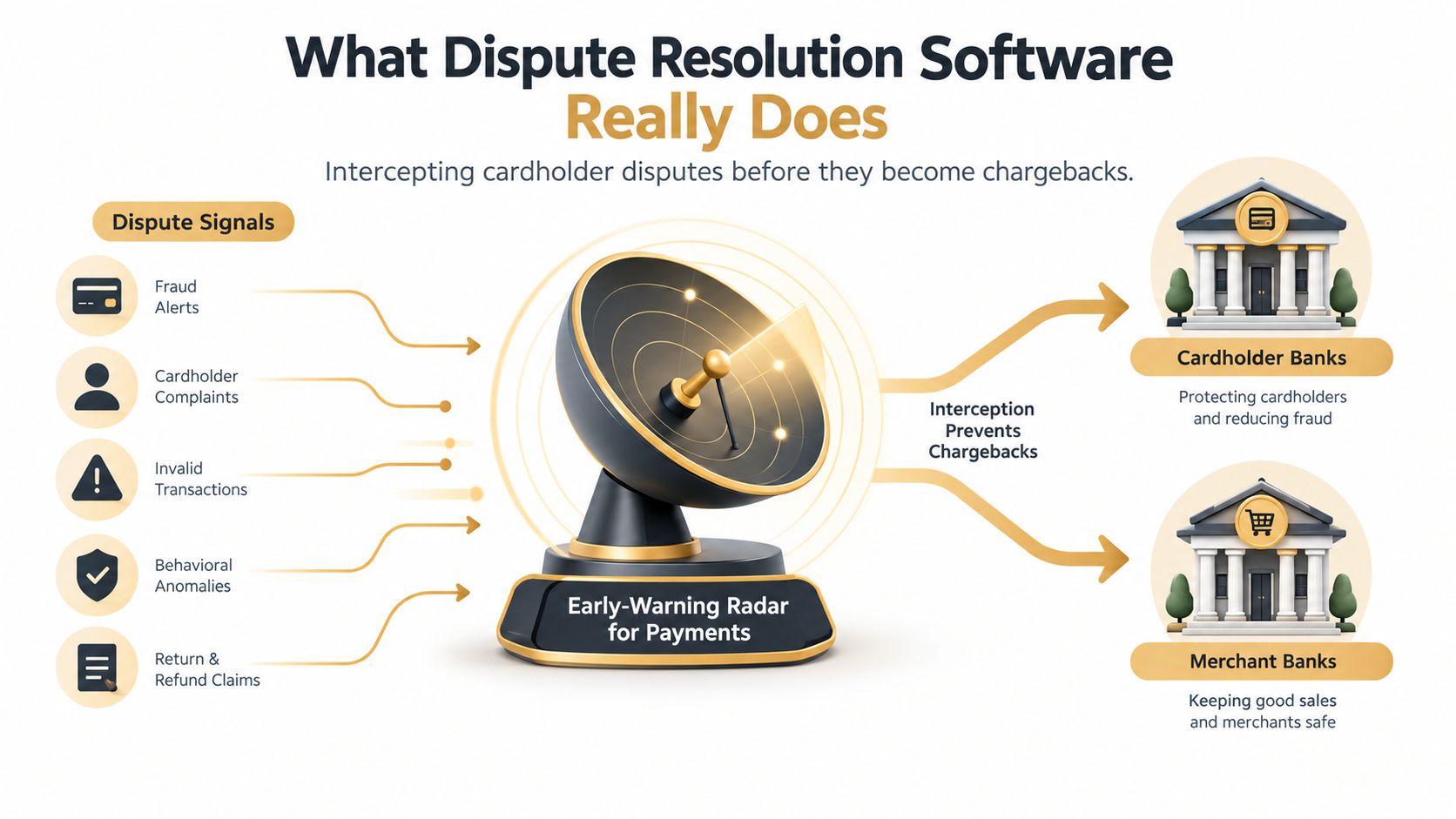
The workflow starts with four participants:
- The cardholder questions a transaction or reports a problem.
- The issuing bank receives the cardholder's complaint and sends a signal through the relevant network process.
- The card network routes the alert or formal dispute according to its rules.
- The acquirer or payment processor connects the merchant to that network and handles the financial movement.
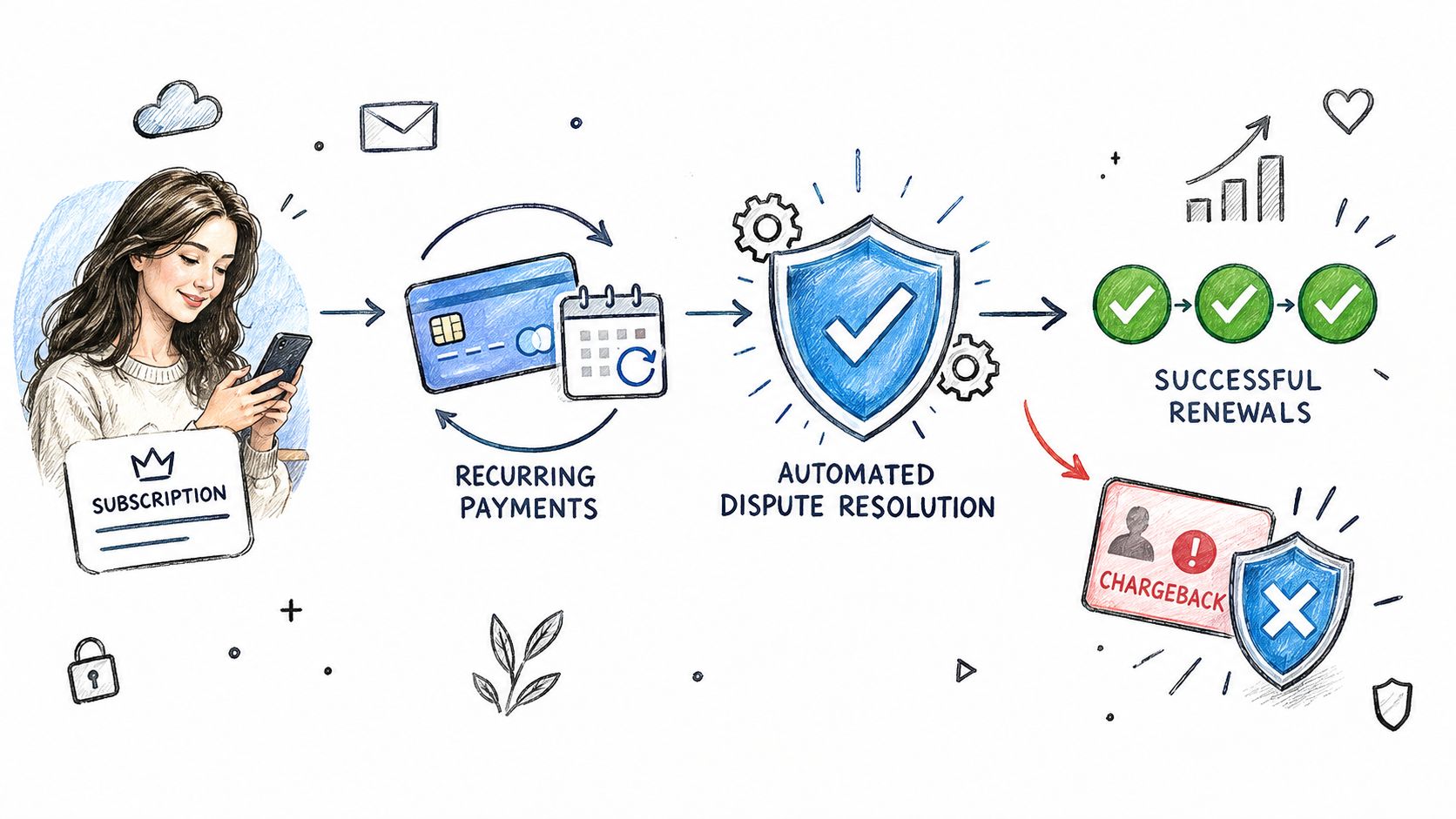
The software sits between those signals and the merchant's action systems. It receives an alert, matches it to the original payment, checks configured rules, and either triggers a refund, asks a human to review the case, or preserves the item for evidence-based defence.
Early interception versus formal resolution
Buyers often get confused. The phrase online dispute resolution can refer to digital mediation or legal workflows that help parties negotiate a dispute. Payment merchants usually need a narrower capability: intercepting a card dispute before it becomes a chargeback.
A platform designed for payment prevention therefore needs more than a case inbox. It must understand network-specific alerts, transaction identifiers, refund status, payment processor responses, and the merchant's decision logic. A legal workflow might organize documents for a hearing. A payments workflow must make a decision before the issuer's deadline expires.
Merchants evaluating Disputely's dispute resolution platform should ask where the product acts in that chain. Does it receive the alert directly? Can it map the alert to the correct order? Can it refund through the connected processor? Can it leave a potentially winnable case untouched while escalating it to representment?
The most useful mental model is a traffic controller. It doesn't decide that every vehicle should stop. It identifies the lane, checks the conditions, and sends each vehicle through the right route. Good dispute resolution software routes low-value or weak cases toward fast refunds and stronger cases toward evidence collection.
How RDR CDRN and Ethoca Alerts Prevent Chargebacks
A subscription customer contacts the issuing bank after seeing a renewal they do not recognize. An alert can reach the merchant before that complaint becomes a formal chargeback. The three prevention rails create this early intervention point, but they differ in how much control the merchant has over the decision.
Visa RDR uses rules for eligible cases
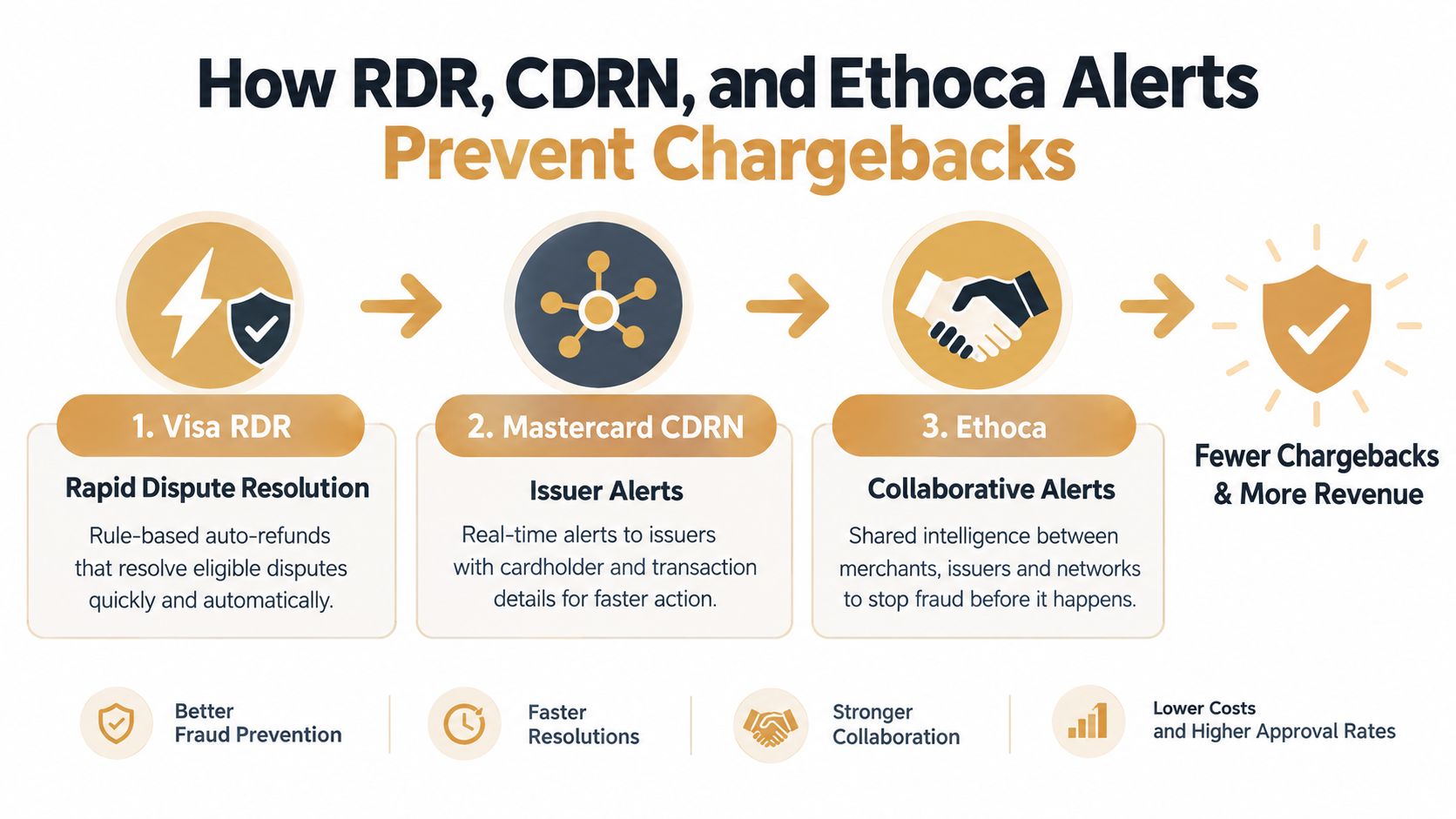
Visa Rapid Dispute Resolution can execute rule-based refunds automatically for eligible Visa cases, as described in the Payments and Risk guide to Visa RDR. The merchant sets conditions in advance, such as transaction characteristics, dispute categories, product type, or refund thresholds. When a qualifying alert arrives, the system applies the configured rule instead of waiting for a staff member to open an inbox.
That structure suits predictable cases. An ecommerce store might refund a low-value order with little chance of successful representment. A subscription business might limit automation to selected reason codes or renewal transactions. The decision is encoded before the alert arrives, so the prevention layer can act within the network's short response period.
CDRN and Ethoca create a human action window
Mastercard Consumer Dispute Resolution Network and Ethoca generally operate through issuer alerts. After a cardholder initiates a dispute, the merchant receives notice and may have about 24 to 72 hours to issue a refund. If the refund is completed during that window, the case can close before formal chargeback filing.
The operational difference is speed. CDRN and Ethoca give a merchant a limited period to match the alert, verify the order, and choose an action. The software must also confirm that the refund reached the processor. A refund request sitting in a queue does not provide the same protection as a completed refund before the alert expires.
Why merchants combine the rails
A practical stack often uses automatic rules for Visa RDR, then combines automated routing with human review for CDRN and Ethoca. The channels may carry different network signals, and the right response can depend on the reason code, ticket size, product, and transaction history.
A simple timeline looks like this:
- The cardholder contacts the issuing bank.
- The issuer or network produces a pre-dispute alert.
- The merchant's software matches the alert to the transaction.
- A rule or reviewer selects refund, review, or evidence preservation.
- The merchant acts inside the alert window.
- The case closes before formal chargeback filing, where eligible.
Decision principle: Automation should remove delay, not remove judgment from every dispute.
The short alert window determines the platform's practical value. Late data, manual exports, or missing refund confirmation can leave the merchant with an email-based process and too little time to act. Immediate routing gives the business room to apply a selective refund policy, while stronger cases can remain available for evidence-based defence.
Traditional Chargeback Management Versus Automated Prevention
Traditional chargeback management begins after the financial event has already occurred. The merchant receives a formal chargeback, identifies the reason code, gathers evidence, writes a response, and submits representment. This process still matters because some disputes are legitimate candidates for defence, but it can't replace early intervention.
Automated prevention starts earlier. It watches for alerts, applies rules, and closes eligible cases before they enter the formal chargeback workflow. The trade-off is direct: the merchant may refund a transaction it could have defended, but it may also avoid the operational and account-level consequences associated with a filed chargeback.
Traditional Management vs Automated Prevention Compared
| Criteria | Traditional Chargeback Management | Automated Alert Prevention |
|---|---|---|
| Intervention point | After formal chargeback filing | Before eligible chargebacks are filed |
| Primary action | Gather evidence and submit representment | Refund, route, or escalate an alert |
| Speed requirement | Managed against the formal response deadline | Managed against the short pre-dispute window |
| Revenue approach | Preserve the sale when evidence supports a defence | Refund selected cases to prevent downstream impact |
| Staff workload | Manual review, documentation, and submission | Rules-based routing with human review for exceptions |
| Best fit | High-confidence, winnable disputes | Low-value, weak, or time-sensitive disputes |
| Main risk | Late action and growing case volume | False-positive refunds and unnecessary revenue loss |
The table shows why these systems should work together. A merchant that refunds every alert may protect its ratio but give away revenue. A merchant that fights every case may preserve individual sales but expose the business to avoidable fees, monitoring-program pressure, and processor scrutiny.
Industry guidance on chargeback management software recommends treating the platform as a data-routing and decisioning layer. Merchants can classify disputes by reason code, ticket size, and network, then reserve refunds for cases with low value or weak win prospects while preserving evidence-based representment for stronger cases.
The right question isn't “refund or fight”
The better question is, which action produces the strongest net outcome for this transaction? A refund may be rational when the order value is low, the evidence is poor, or the customer relationship matters more than the sale. Defence may be rational when delivery records, authentication, usage history, and customer communications create a coherent case.
Automation makes that policy repeatable. It also creates an audit trail, so the payments team can review why a particular alert was refunded, escalated, or left for representment instead of relying on scattered notes.
Key Features and KPIs Every Merchant Should Evaluate
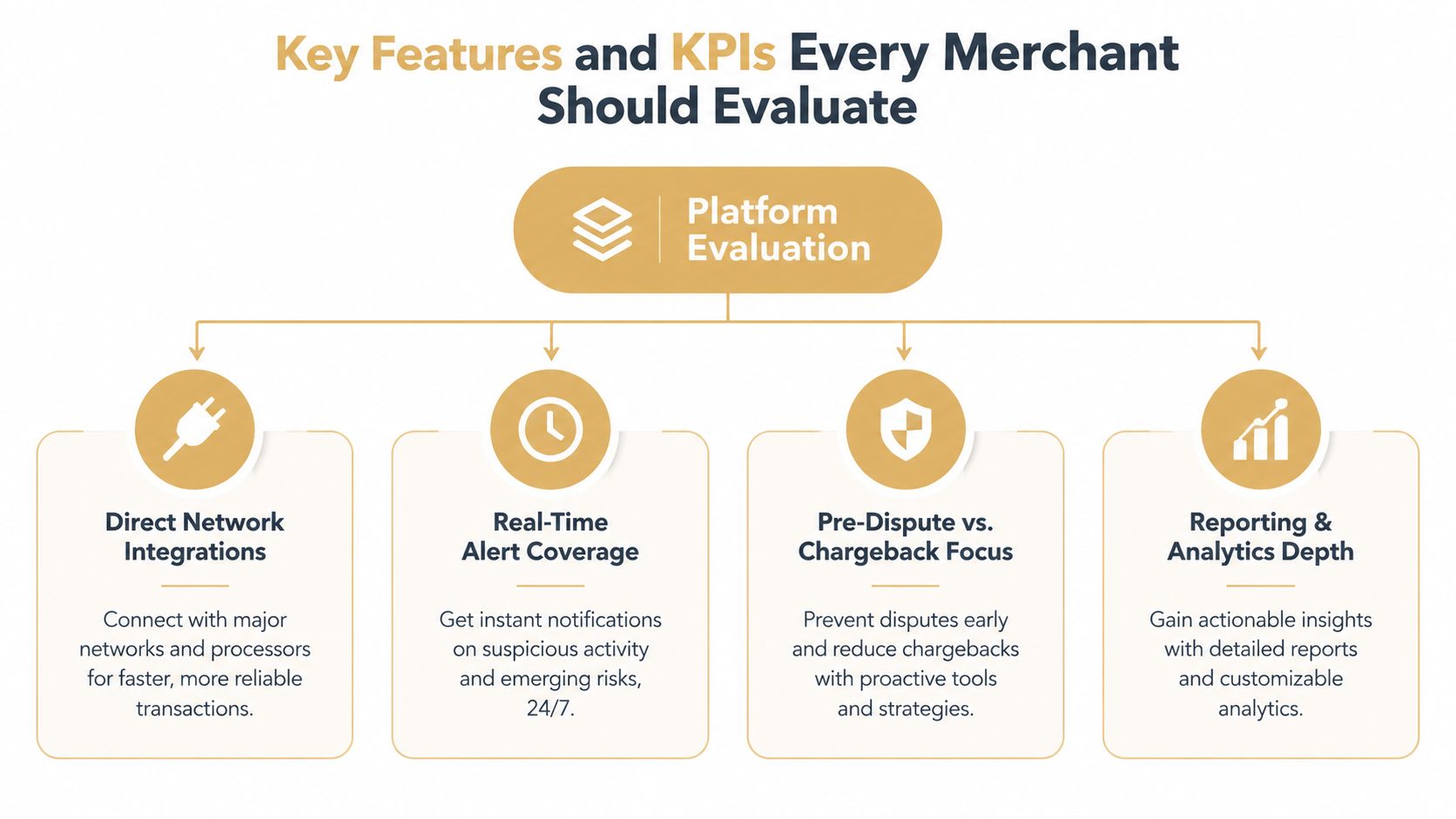
A vendor demo can look polished and still fail when a genuine alert arrives. Evaluate the full operating path, from a payment-network signal to the processor update, then connect each capability to a measurable result. The platform should function as a prevention layer during the short window before a dispute becomes a chargeback, not as a generic case-management archive.
Start with signal coverage
Direct connections to Visa RDR, Mastercard CDRN, and Ethoca are the starting point. A system that receives information only after formal filing misses the main opportunity, which is deciding whether to refund, review, or preserve the case while the prevention window remains open.
Check for prompt alert delivery, dependable transaction matching, and confirmed refund status. The platform should connect with the merchant's payment environment, including Stripe, PayPal, Shopify Payments, or Authorize.net where relevant. Without those connections, staff must copy details between systems, increasing delay and matching errors.
Measure time to action from alert receipt to refund, escalation, or review. An attractive average can conceal missed alerts, so request exception reports, delivery-failure records, and visibility into unresolved events.
Test the decision layer
Rules should support selective decisioning rather than a single “refund everything” setting. Merchants should be able to classify alerts by network, reason code, order value, customer history, product type, subscription status, and evidence strength.
This distinction protects margin. Refunding every alert may reduce chargebacks but surrender revenue unnecessarily. Preserving every alert may protect revenue in the short term while allowing preventable cases to become chargebacks. The platform should identify strong-evidence cases for representment and direct weak, low-value, or high-risk cases toward prevention.
Track these measures:
- Prevention rate, the share of eligible alerts resolved before formal filing.
- Refund-to-prevention ratio, showing how much revenue is surrendered to achieve prevention.
- Representment win rate, indicating whether retained cases are defensible.
- Chargeback rate, reviewed by network, product, customer segment, and payment flow.
- Time to action, separated by alert type and operational shift.
Demand usable reporting
Reporting should show the networks and reason codes behind disputes, not only a total count. Subscription merchants need to separate renewal confusion, non-receipt, fraud claims, and cancellation issues. Ecommerce teams should compare product categories, fulfilment methods, delivery regions, and customer-support outcomes.
The online dispute resolution platform market is projected to grow from USD 1.76 billion in 2025 to USD 2.06 billion in 2026 and USD 4.54 billion by 2031, with a projected 17.12% CAGR between 2026 and 2031, according to Mordor Intelligence's market forecast. As vendors multiply, buyers should compare network coverage, decision controls, reporting, uptime, support, and transparent pricing instead of accepting broad artificial-intelligence claims.
Buyer test: Ask the vendor to demonstrate one alert from receipt through transaction matching, decisioning, refund confirmation, and reporting.
Real World Use Cases and ROI for Ecommerce and Subscriptions
A DTC brand launches a product, then sees “fraud” disputes rise. The payments team can refund every alert immediately, yet that choice may give up revenue from customers who received the order and later changed their minds. A better workflow sorts alerts by evidence and timing. Orders with delivery confirmation, consistent device details, and clear customer communications may be defensible. Weak-evidence or low-value cases may be better candidates for a refund within the payment network's prevention window.
The decision should match the merchant's objective. Selective refunding protects defensible sales, while aggressive prevention can reduce formal chargebacks when processor or account stability is under pressure. In both cases, dispute resolution software acts as a short payment-network response layer, not a general legal dispute forum. It connects alerts, order records, customer history, and refund actions so the team can decide before a chargeback is filed.
Subscription billing needs a different policy
Subscription disputes often start with renewal confusion, forgotten cancellations, or a customer's understanding of when a trial ended. A rule can refund a renewal when the account shows little usage or a cancellation request. It can preserve evidence when the subscriber continued using the service after the billing event.
That distinction protects more than one transaction. It gives customers with a credible billing complaint a direct remedy, while separating genuine confusion from friendly fraud. Linking dispute reasons with renewal events and support conversations also helps the merchant identify unclear billing notices or cancellation paths.
For Shopify merchants, Shopify chargeback protection resources can help frame integration around order data, payment alerts, fulfilment evidence, and refund execution. Shopify remains part of the transaction workflow rather than a separate dispute environment.
A high-risk merchant facing reserve pressure may choose broader prevention. Refunding more alerts can protect processing continuity, even when it sacrifices some individual sales. Root-cause analysis can then address misleading product descriptions, delivery delays, billing disclosures, or cancellation flows.
Market forecasts point to continued growth in cloud-based dispute-resolution deployments and regional demand, but that direction does not guarantee a particular merchant's return. ROI depends on the policy applied to each alert, the merchant's fees and margins, evidence quality, payment-network mix, and the cost of operational handling. A selective policy may retain more revenue. An aggressive policy may reduce exposure faster when account stability carries greater value.
This video can provide another visual explanation of the payment and dispute workflow:
Implementation Steps and Buyers Checklist for Your Store
Implementation should begin with the payment paths that generate the most dispute exposure. Connect the processors and commerce systems, map alert fields to order records, then confirm that the platform can identify the correct transaction without manual searching.
A practical rollout sequence
- Connect payment processors. Include the processors used by your store, subscription engine, and regional checkout flows.
- Define refund rules. Start with clear conditions for low-value, low-evidence, or clearly valid customer claims.
- Create an escalation path. Send ambiguous cases to a named payments or support owner instead of allowing them to expire.
- Test alert delivery. Confirm that alerts arrive, transaction matching works, and refunds receive a successful status.
- Review analytics. Examine reason codes, networks, products, billing events, and customer-service history.
- Adjust selectively. Compare prevented cases with retained revenue and representment outcomes before expanding automation.
Questions to ask before buying
- Integrations: Does the platform support your network rails, processors, store, and subscription tools?
- Automation controls: Can you create different rules by network, reason code, order value, and customer context?
- Filtering: Can it avoid refunding cases where your evidence indicates a strong chance of winning?
- Reporting: Does it show prevention rate, refund-to-prevention ratio, chargeback rate, representment results, and time to action?
- Reliability: How does the vendor report alert delivery, system availability, failures, and recovery?
- Commercial terms: Are setup costs, per-alert charges, contracts, and support obligations clear?
Begin with a baseline using your own transaction, refund, alert, fee, and representment records. Then model separate outcomes for aggressive and selective prevention. That comparison will show whether the platform earns its cost through avoided chargebacks, reduced staff work, preserved processing access, or a combination of those outcomes.
Disputely connects merchants to Visa RDR, Mastercard CDRN, and Ethoca alerts, then helps route incoming disputes to real-time refund rules or review before they become formal chargebacks. Visit Disputely to connect your payment processors, configure prevention logic, and evaluate the savings potential for your ecommerce or subscription business.


