
What Is Declined? Payment Declines Explained
A payment is declined when the authorization request receives a non-approval response from the issuer, processor, or fraud-control layer. Insufficient funds are the leading global decline reason, ahead of suspected fraud and exceeding the approval amount.
You've probably seen the customer's version of the problem: they click Pay, the spinner runs, and the checkout returns “Payment declined.” The customer reaches for another card. Your support team sees a failed order. Your dashboard records a red status. Everyone moves on without learning whether the first attempt failed because the account lacked funds, an address check failed, an issuer was temporarily unavailable, or your own fraud rules blocked a legitimate buyer.
That shortcut costs revenue and creates operational risk. A decline isn't one diagnosis, and it isn't automatically evidence of fraud. It's a control boundary. Until a valid authorization exists, the merchant shouldn't capture the payment, ship the order, or treat the transaction as approved.
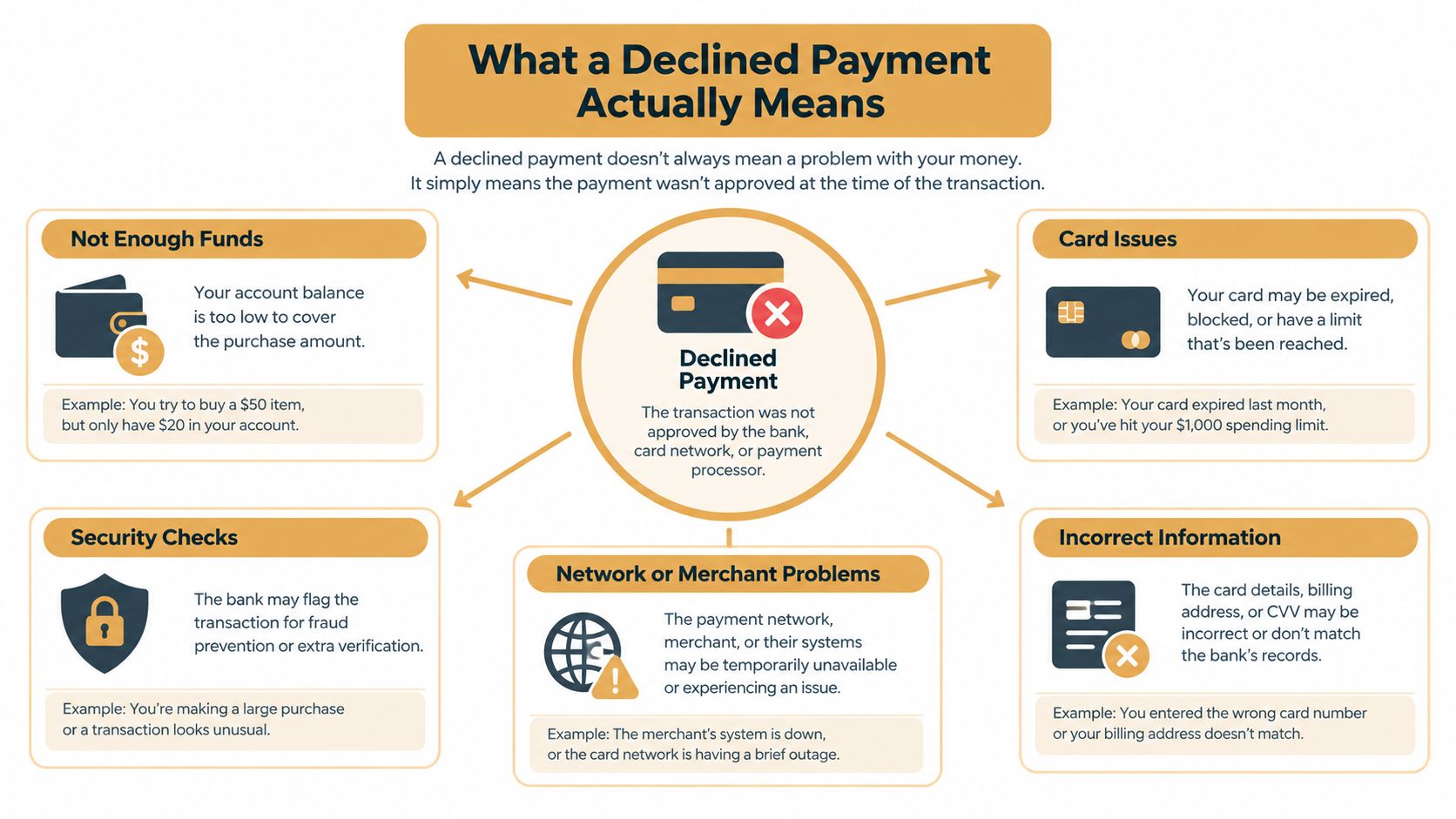
What a Declined Payment Actually Means
A customer enters card details for a product, subscription, or service. Your checkout sends those details to a gateway or processor, which passes an authorization request through the payment network to the issuer. An issuer, processor, fraud engine, or authentication layer then returns an approval or a non-approval response.
That non-approval response is what “declined” means in card payments. Visa Acceptance describes a decline as a non-approval from the issuer, processor, or fraud-control layer, with capture and fulfillment blocked unless a later authorization succeeds.
The customer usually sees none of that detail. They may see “Your card was declined,” while your payment log contains a response code, request ID, gateway message, and processor trace. Those internal details matter because “bank rejection” is only one possible explanation.
The point where the transaction stops
A decline happens during authorization, before the merchant has a valid approval to rely on. The processor may reject the request because card data is missing or invalid. The issuer may return insufficient funds, an inactive account, or temporary unavailability. A fraud-control layer may stop the request because its risk score crosses a configured threshold.
Those outcomes look similar at checkout but require different actions:
- Data problem: Correct the card number, expiration date, billing address, or security value, then submit a clean request.
- Temporary condition: Retry later under controlled rules, or ask the customer to try again after confirming funds.
- Credential problem: Request an updated card or another payment method.
- Risk decision: Use appropriate authentication or route the buyer to support instead of assuming criminal activity.
A merchant that treats every decline as a failed sale misses the operational distinction. The transaction has been stopped for a reason, and the response code tells you which recovery path is safe.
For merchants expanding across regions, payment-method coverage can add another layer of complexity. Comparing Bangladesh payment gateway options can help teams understand how gateways, local methods, and processing capabilities differ before they interpret a local decline as a customer problem.
Practical rule: A customer-facing message should be simple, but the merchant-facing record must be specific.
The useful taxonomy is straightforward. Soft declines may succeed after time, authentication, or corrected details. Hard declines indicate that repeating the same request is unlikely to help and may increase friction or issuer concern. That distinction turns “the payment failed” into a decision about what happens next.
The Soft vs Hard Decline Taxonomy
The most useful first question isn't “Was the payment declined?” It's “Can this exact condition reasonably change?”
A soft decline is temporary or potentially recoverable. Insufficient funds may resolve after the customer moves money into the account. An issuer may be briefly unavailable. A fraud-related response may succeed after stronger customer authentication. A malformed request may work after the merchant corrects the data.
A hard decline is structural or explicitly non-retryable. An expired card, closed account, inactive credential, or issuer instruction not to honor the transaction needs a different remedy. Repeating the same request doesn't address the underlying condition.
| Category | Typical Causes | Retry? | Customer Action |
|---|---|---|---|
| Soft decline | Insufficient funds, temporary issuer unavailability, processor timeout, recoverable authentication issue | Yes, with controlled delay and limits | Confirm funds, complete authentication, or try again later |
| Hard decline | Expired or inactive card, closed account, non-retryable fraud decision, invalid credentials | No, not without a meaningful change | Update card details or choose another payment method |
Why retry discipline matters
A retry is not harmless just because the first authorization failed. Repeating a hard decline can produce duplicate attempts, frustrate the customer, and add signals that make later approvals less likely. It can also create confusing records for support teams, especially when several attempts appear against one order.
A safer decision rule is:
Retry temporary funds, availability, or recoverable authentication conditions with backoff. Don't retry card-validity, account-status, or non-retryable fraud declines without new information.
The response code should drive that rule. A temporary issuer problem might justify a later attempt. An expired card should trigger a request for updated credentials. A suspected fraud response may call for step-up authentication, manual review, or an alternate method, not an endless loop of automated submissions.
Recurring billing needs a separate treatment
Subscription teams often make the mistake at renewal. A scheduled charge fails, the system applies the same retry schedule to every customer, and the dunning flow treats a closed card exactly like a momentary funds shortage. That approach can cancel recoverable subscriptions while repeatedly contacting customers whose credentials need replacement.
Use the decline category to choose the message. For a funds-related soft decline, explain that the billing attempt didn't complete and provide a safe way to retry. For an expired card, send the customer directly to a secure update flow. For a hard risk decision, avoid language that accuses the customer of fraud, and offer a legitimate alternate payment path.
The objective isn't the highest raw retry count. It's controlled recovery without duplicate attempts, unnecessary churn, or weakened risk controls.
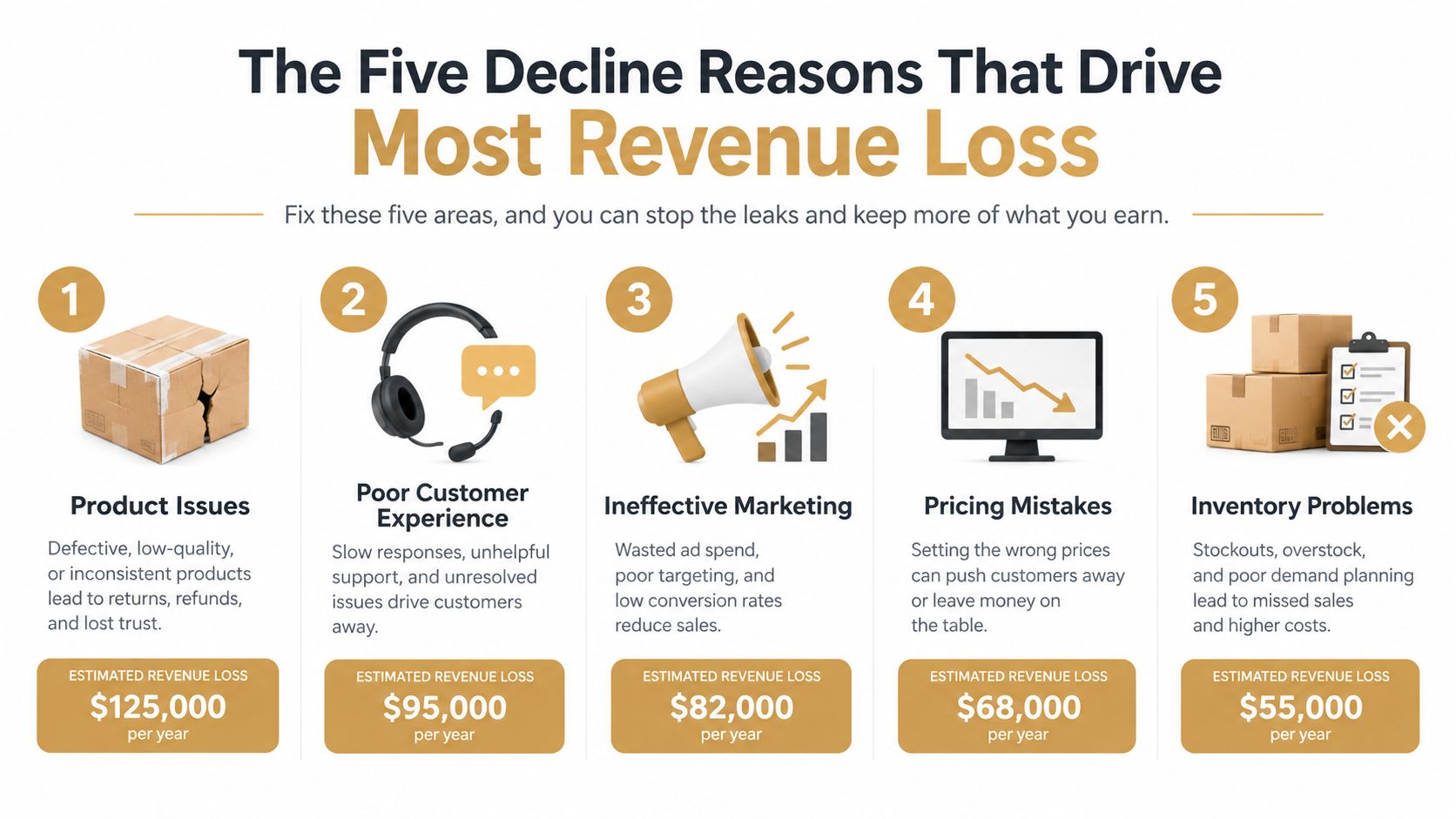
The Five Decline Reasons That Drive Most Revenue Loss
Visa identifies insufficient funds as the leading global decline reason, followed by suspected fraud and exceeding the approval amount, as documented in its merchant success guidance. That ordering changes the first operational response. Merchants often add screening before they improve timing, messaging, and retry logic, even though the most common condition may be temporary access to funds.
1. Insufficient funds
This is usually a timing and communication problem, not a fraud verdict. The customer may have reached a spending limit, moved money between accounts, or attempted the purchase before a deposit cleared.
The safe response is a controlled retry where the processor indicates that retrying is appropriate. Tell the customer what happened without exposing issuer-specific details, and let them use another method if the payment remains unavailable. For subscriptions, keep the account state clear so a temporary billing problem doesn't look like a cancellation.
2. Suspected fraud
A fraud response can come from the issuer, gateway, processor, or merchant rules. It may reflect unusual location, device behavior, velocity, transaction size, or a mismatch between the customer's history and the current attempt.
Don't automatically weaken screening to recover one order. Instead, separate low-confidence friction from a hard risk block. Stronger authentication, a familiar device, or a support-assisted review may resolve a legitimate transaction without treating every buyer as suspicious.
3. Exceeding an approval amount or limit
The issuer or a risk layer may reject a transaction because the amount exceeds an approval threshold, spending limit, or configured merchant boundary. A partial authorization, corrected amount, or alternate payment method may be appropriate, depending on the response and your business model.
Check whether the amount changed between cart, tax, shipping, and authorization. A mismatch can turn a valid customer request into a request the issuer never intended to approve.
4. AVS or CVV mismatch
An address verification or card security mismatch can mean a typo, an outdated billing address, an international cardholder, or a genuine risk signal. Merchant rules that treat every mismatch as a permanent fraud event can reject legitimate customers, particularly when billing and shipping details naturally differ.
Review the exact field that failed and the confidence of the surrounding signals. Ask the customer to verify billing details, trigger appropriate authentication, or route the order for review instead of blindly retrying the same request.
5. Expired, inactive, or temporarily unavailable cards
An expired or inactive card requires new credentials. A temporary issuer outage may resolve later. The customer-facing message can be similar, but the recovery action is opposite, which is why the raw response code and processor reason matter.
Maintain separate workflows for update, wait, and alternate method. Adding more fraud screening won't fix an expired card, and asking a customer to wait won't fix a closed account.
Why an Authorization Decline Can Still Become a Chargeback
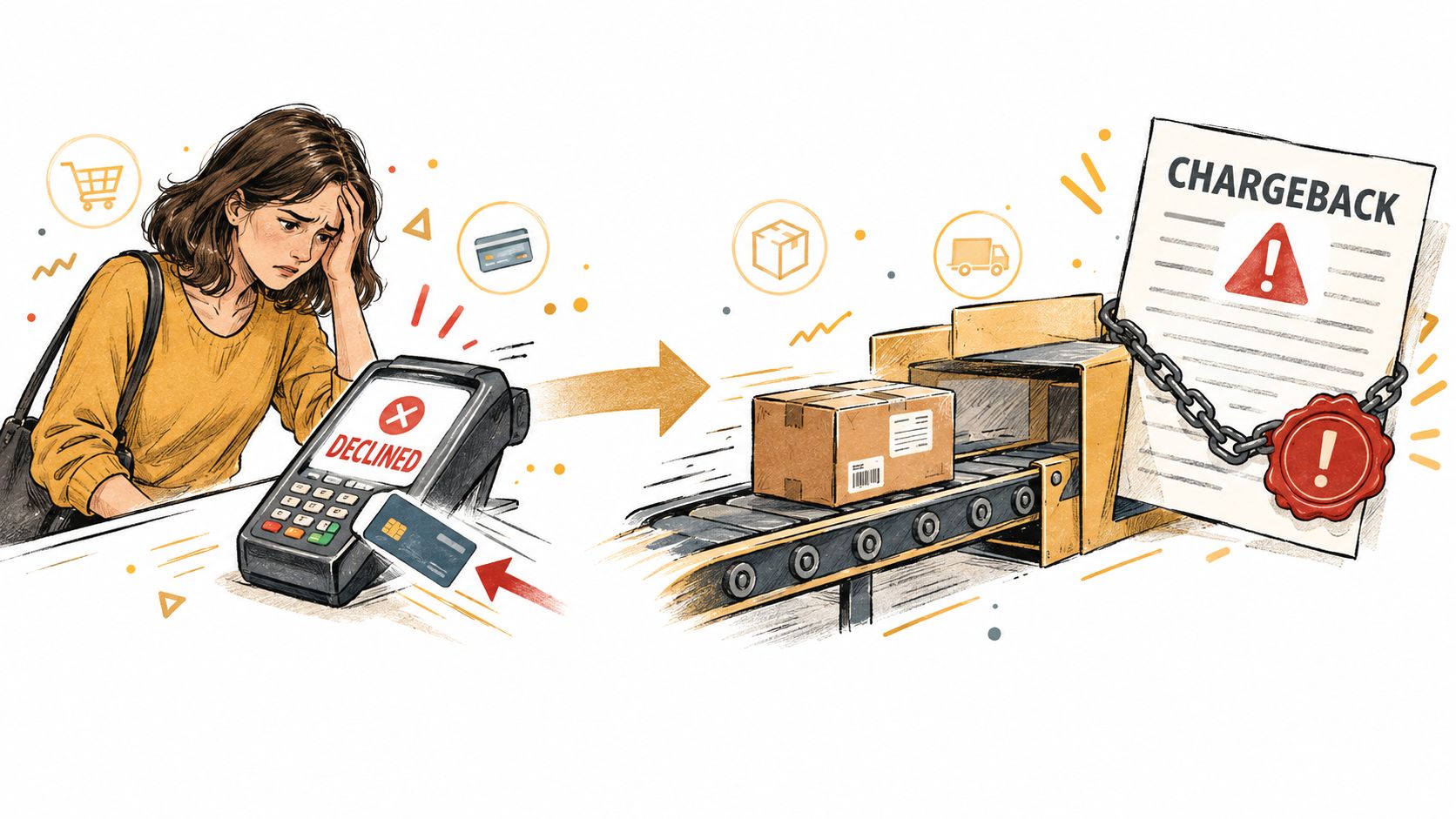
An authorization decline should stop the transaction. The hidden risk appears when another system later captures, fulfills, or settles it anyway.
Mastercard's chargeback guide identifies authorization-related chargebacks for transactions where authorization was required but wasn't obtained, including cases involving a declined card-not-present authorization that was later processed through an exception or stand-in path. In operational terms, a decline isn't just a lost sale. It's a boundary your order, warehouse, and settlement systems must respect.
The control merchants need
Your system should block capture and fulfillment until it has a matching approval. That means the order service can't rely only on a checkout success page, and the warehouse can't treat an order record as proof that payment was authorized.
Reconcile three records:
- Authorization: Was an approval returned, and what approval code or request ID identifies it?
- Capture: Did the merchant submit the approved amount for capture?
- Settlement: Does the settled transaction match the approved and captured record?
Any settlement without a matching approval deserves investigation. So does any capture connected to a declined authorization. The goal is to catch an integration or exception path before it becomes an authorization dispute.
The broader dispute environment shows why payment teams shouldn't separate checkout controls from post-transaction operations. Cardholders disputed $9.8 billion in credit-card charges during 2024, producing $5.9 billion in chargebacks, according to the Federal Register report. Cancelled recurring transactions, including subscriptions, memberships, and utility bills, represented 40% of disputes on general-purpose cards, which makes billing continuity and customer recognition important long after the initial authorization.
For customers, basic account hygiene and awareness can support efforts to protect your financial identity, but merchants still own the capture control. If a valid approval doesn't exist, don't ship the goods and don't submit the payment.
Payment teams can also use chargeback-fighting workflows to organize evidence and response operations, but prevention starts earlier, with a strict no-capture-on-decline rule.
The False Decline Problem and the $50 Billion Recovery Opportunity
A customer can see a payment fail, retry with the same card, and complete the purchase moments later. That sequence should prompt a closer look. The first decline may have reflected an overly strict fraud rule, an authentication failure, or a signal that did not match the customer's real behavior.
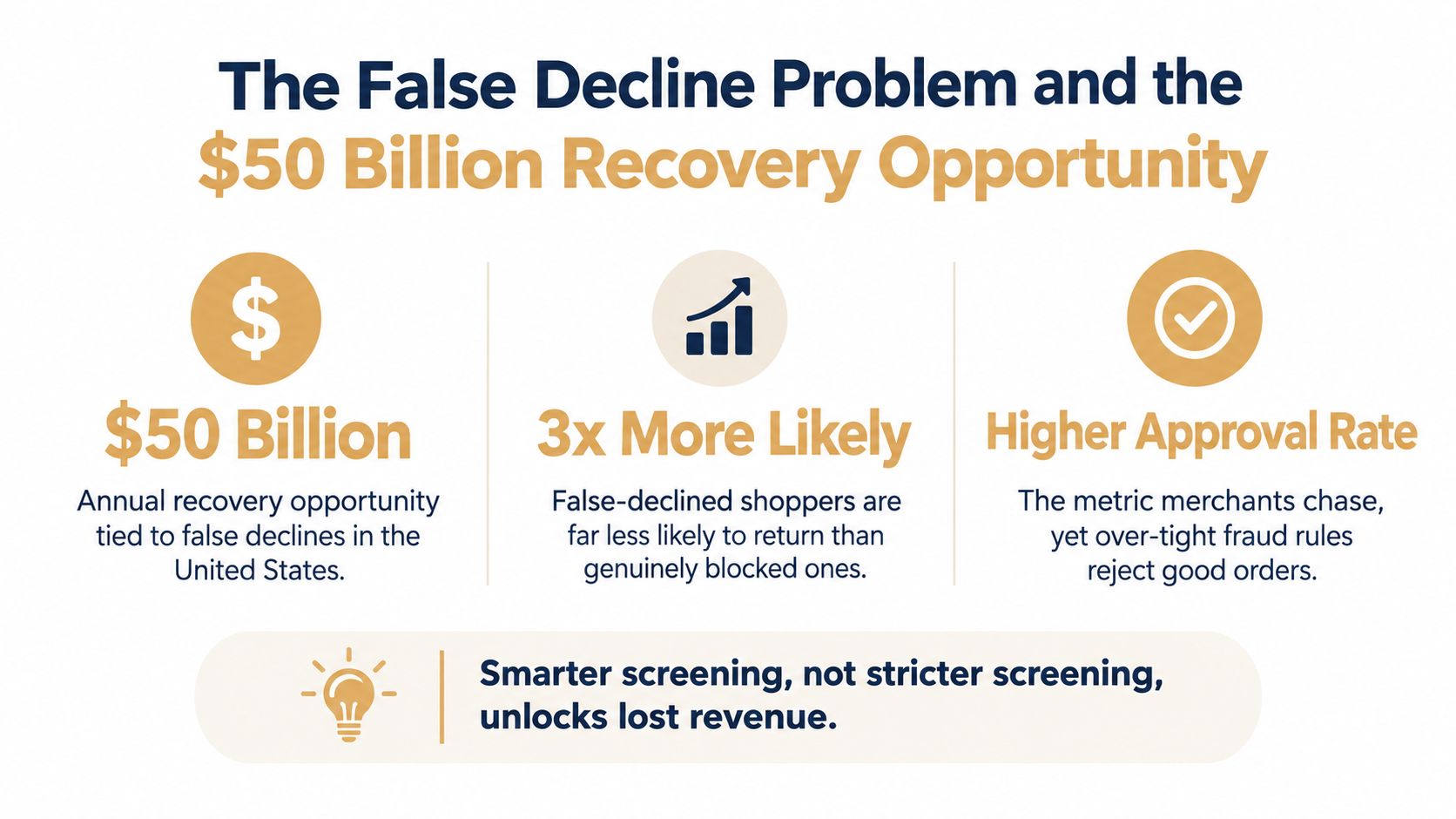
A 2025 merchant survey reported that 47% of merchants estimated up to 5% of legitimate orders were falsely declined, associating that level with approximately $50 billion in potentially recoverable U.S. revenue in the survey report. The figure points to a control problem: a payment boundary can stop genuine demand along with suspected abuse.
Measure the recovery path, not just the rejection
A false decline may become visible only after the original response. The customer might retry successfully with the same card, switch payment methods, contact support, or leave permanently. Each outcome provides evidence about whether the original control matched the actual risk.
Build a recovery view that connects the initial authorization with later results:
- Issuer and country: Find patterns concentrated in a particular issuer or market.
- Device and account: Compare established customers with new devices or guest checkout.
- Payment method: Separate cards, wallets, bank methods, and recurring billing.
- Rule and authentication: Identify whether AVS, CVV, device risk, 3DS, or a gateway decision stopped the order.
- Post-transaction outcome: Compare later approval, refund, fraud report, and dispute behavior.
An approval rate alone cannot answer these questions, and a fraud rate alone cannot show the revenue that controls turned away. A more useful operating measure is contribution margin from legitimate approvals after fraud, refunds, and disputes.
Build a false-decline recovery loop
Start with the decline event. Preserve its reason and rule decision, then observe what happens next. If customers complete the same purchase after a later authentication step, the original control may be too strict. If a segment produces fraud or disputes after approval, improve the signals before reducing checks.
Teams that already face higher dispute ratios can review their high chargeback rate exposure before loosening fraud controls. That review helps separate revenue recovery from risk transfer.
Fragmented records make the loop harder to run. Checkout logs, fraud decisions, authentication results, processor responses, and dispute records often sit in separate systems. Connecting them gives payment teams a traceable basis for adjusting rules and recovering legitimate orders without approving blindly.
The right target is to recover the right declines while preserving controls against genuine abuse, so every rejected order remains explainable.
A Merchant Playbook for Diagnosing and Resolving Declines
Start with evidence, not the customer-facing phrase. “Payment declined” is useful for a buyer, but it's too broad for an operations team.
Instrument the transaction
Store the response code, request ID, gateway result, processor trace, authentication outcome, fraud-rule decision, amount, currency, and final order state. Keep authorization, capture, refund, and settlement events connected to the same transaction identity.
Then segment the data by reason, issuer, country, device, payment method, customer status, and subscription state. A high-level decline rate can hide a concentrated problem, such as one issuer rejecting a new billing descriptor or one fraud rule blocking returning customers.
A failure-mode approach can help teams rank these events by severity, frequency, and detectability. Matil's failure mode analysis guidance offers a useful framework for examining where a payment flow can break and which controls should address each failure.
Apply a decision tree
Use the response reason to select one controlled action:
- Temporary funds or availability issue: Retry after a delay, with a maximum attempt policy and no duplicate order creation.
- Correctable data issue: Ask for corrected details and submit a new authorization.
- Expired or inactive card: Send the customer to a secure credential-update flow.
- Recoverable risk signal: Request step-up authentication or route the transaction to review.
- Hard issuer or fraud decline: Stop automated retries and offer an alternate method or support path.
After every authorization decision, enforce the capture rule. No approval means no capture and no fulfillment.
Close the loop after checkout
Decline analytics and dispute operations belong in the same payment control system. A merchant may authorize correctly at checkout and still face a dispute later because the customer cancelled a recurring transaction, didn't recognize the descriptor, or challenged the charge.
Disputely is one option for this post-transaction layer. It connects with Visa Rapid Dispute Resolution, Mastercard CDRN, and Ethoca alerts, then can notify the merchant when a dispute starts and support refund rules before the chargeback is filed. It also connects with processors and commerce systems including Stripe, PayPal, Shopify Payments, Authorize.net, and Square.
The important design principle is continuity: diagnose the decline, recover the legitimate order, prevent unauthorized capture, and act on disputes before they settle into losses.
Reducing False Declines and Building a Resilient Payment Flow
Use a short operating checklist:
- Instrument: Save codes, request IDs, authentication results, and settlement matches.
- Segment: Separate soft declines, hard declines, issuer behavior, fraud rules, and recurring billing.
- Recover: Retry only temporary conditions, update expired credentials, and use authentication where it can change the decision.
- Defend: Block capture without approval and monitor fraud, refunds, disputes, and approval quality together.
- Learn: Compare declined attempts with later successful payments and customer outcomes.
For Shopify merchants, a dedicated Shopify chargeback protection workflow can connect dispute alerts to refund decisions, while the payment team keeps authorization and capture controls in its own systems. The result is a resilient flow that doesn't confuse every decline with fraud or every approval with a good outcome.
Disputely connects payment processors to real-time dispute alerts and automated refund rules, helping merchants act before an initiated dispute becomes a chargeback. Visit Disputely to see how it can fit into your decline, recurring billing, and post-transaction control process.


